The SupaBoy! Hyperkin’s New Portable SNES Handheld

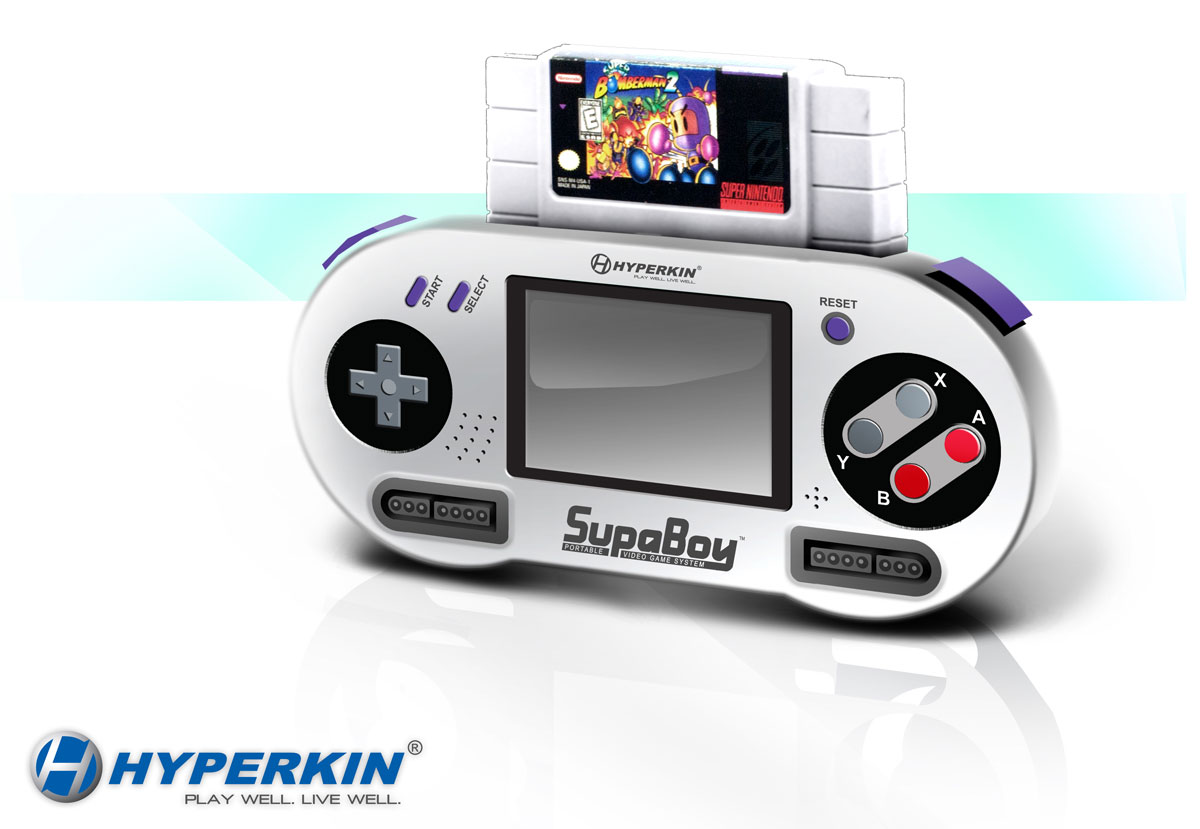
SupaBoy Hyperkin's SNES Prototype Super Nintendo Handheld System

Want proof of a company dedicated to retro gaming? Hyperkin is announcing a new SNES handheld! Yes, that’s about 20 years after the release of the original Super Nintendo!

As soon as I heard about this project, I lined up an interview with Sergio (aka “The Applemonkey“) from Hyperkin. As I spoke with him for a phone interview, Sergio had a fully-functional prototype in hand, but he wanted to make it clear that changes could be made by the time Hyperkin releases its final product.

Mark: What’s the story on the name?

We’ll it’s called “SupaBoy.” It has a little bit of a big feel to it. We were thinking it’s big, so maybe we’ll call it “big boy.” But then everything would think restaurant. Someone was like, it’s a Super Nintendo, so let’s get the Super name in there. Let’s call it “Super Boy,” and that became “SupaBoy.” Everyone liked it, so it stuck.

Mark: What motivated Hyperkin to create a SNES handheld/home console?

Hyperkin has the FC Mobile II (NES) and Gen Mobile (Sega Genesis). It was time for us to do a Super Nintendo mobile.

Mark: What can you tell me about the “SupaBoy Portable Video Game System?”

Sergio: Our previous systems have wireless controllers with them. Those are great, but if you lose a controller, it’s not like you have an extra one lying around. Most retro gamers have extra Super Nintendo controllers already. Offering actual controller ports allows people to use whatever controller they want.

Mark: That means you could use your favorite turbo controller with it.

Sergio: Exactly. Let’s say you’re playing by yourself and then you want to go to two- player mode. Just plug in the controllers, and hook it up to a TV, and you have a 2-player system.

Mark: Does it have to be hooked up to a TV for an external controller to work?

Sergio: Actually, you could prop it up and play it just as it is with them attached.?? Think car ride or bus or subway with a buddy.

Mark: What sort of AV outputs will the SupaBoy have?

Sergio: The system will have stereo speakers. The photo only shows one speaker. Plus, it’ll have an AV out jack right next to the power jack.

Mark: Will the AV output be stereo too?

Sergio: Yeah, it’ll end in your normal video and stereo RCA outputs.

Mark: You mentioned a power jack. Is this rechargeable?

Sergio: It’s rechargeable. So you don’t need to run around the house stealing batteries out of remotes and other controllers.

Mark: What’s battery life looking like?

Sergio: We’ve tested it for 5 to 5 1/2 hours of game play. And it looks good. It has a great LCD screen. It’s bright and crisp. The screen is 3.5 inches. Action and racing games stay pretty clear.

Mark: What games have you tested it with?

Sergio: Ha, first game I tested it with was Super 3D Noah’s Ark. I brought it in and the guys in the office were like, “Is that some sort of homebrew?”

Mark: That’s awesome!

Sergio: Yeah, what a goofy game. You get to shoot fruit into animals’ mouths. Anyway, I also tested it with Kirby’s Avalanche, F-Zero, Super Mario RPG, Star Fox, the Super Game Boy adapter, and a bunch of other games. So far we haven’t found any that haven’t worked.

Mark: How about PAL or Super Famicom games?

Sergio: We tested it on a couple Super Famicom games, and it worked. I’m really not sure about PAL stuff. I don’t have any PAL games. If you have any you want to send to me, I’ll test it out.

Mark: Sorry, I don’t have any either. Just a PAL Little Samson for the original NES. I’m guessing that the PAL/NTSC technology would be a no go, but I was just curious.

Mark: How about accessory compatibility?

Sergio: It’ll work with the Super Scope. You can set it up to play 5-man Bomberman or even use the Mario Paint mouse. It’ll obviously work with traditional Super Nintendo controllers.

Mark: You mentioned its feeling “big.”? How’s it feel during testing?

Sergio: I have big hands, and I’d say it’s comfortable in hands of people with big hands. Plus, we had some girls try it out, and it seemed comfortable in female hands.
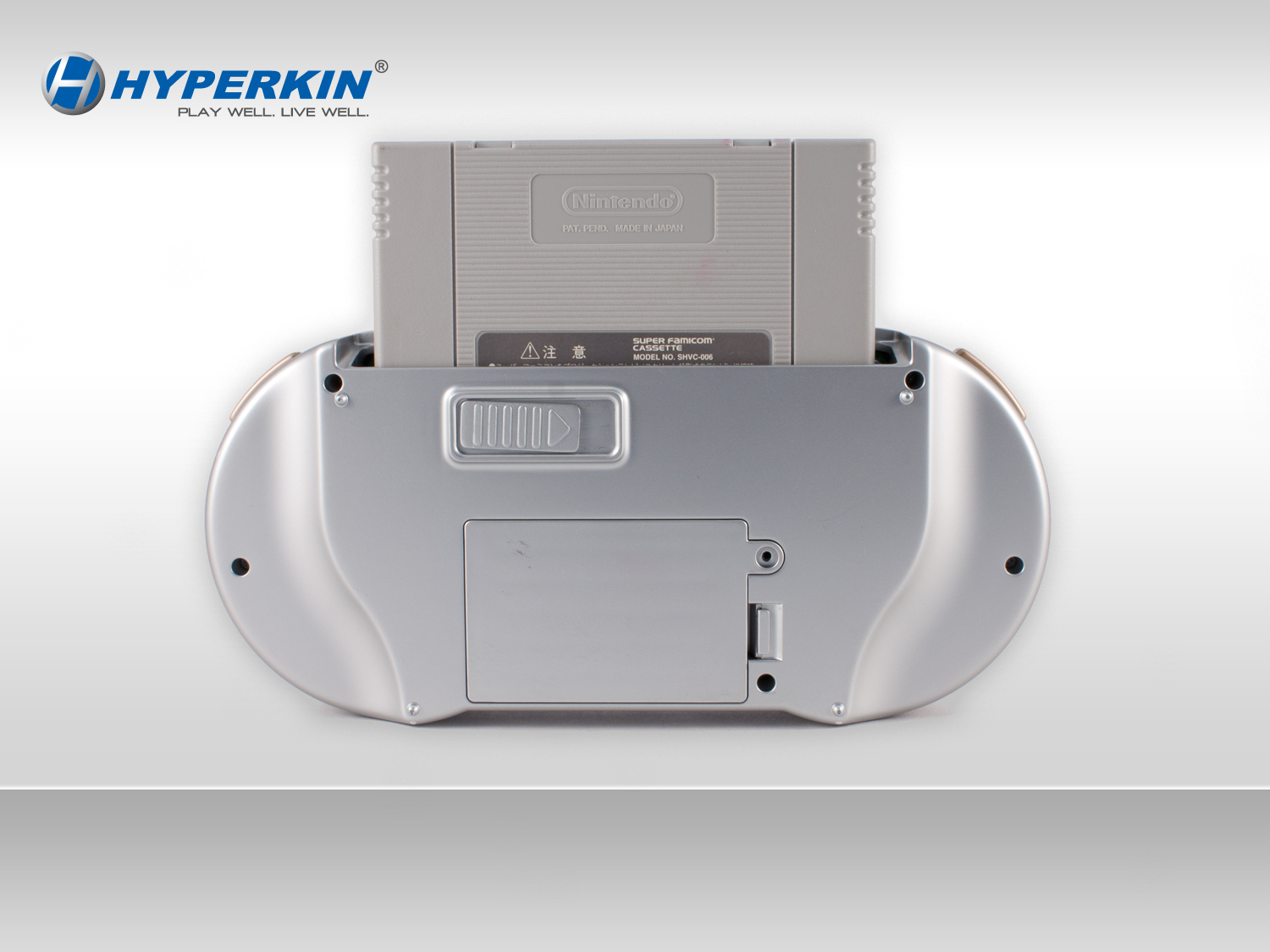
Sergio:Oh yeah, and it’ll have a cartridge lock feature. That way if you’re moving around while playing, it’ll help prevent tripping out the game.

Mark: That’s great! Let’s be honest. Lots of us move our hands when making Mario jump.

Sergio: Exactly. I love watching people do that! So the game cartridge lock will help prevent your game play from getting messed up if you do that.

Mark: How heavy is the SupaBoy?

Sergio: It’s currently about 11.5 ounces and feels lighter than a Game Gear.

Mark: What’s it come with?

Sergio: It comes with the system and a charger. I’ve had my FC Mobile II forever, and it’s pretty beat up now. I’m hoping we can release with some sort of a bag/case to slip it into.

Mark: So how long has it been in development?

Sergio: We’ve been working on it for over a year to a year and a half. We’ve gone through a lot of prototype drawings. Some looked more square, and we finally decided that we wanted it to look like a big controller.

Mark: Do you have a release date yet?

Sergio: Hopefully Summer 2011.

Mark: How about a retail price?

Sergio: No final price at this time. I’m guessing that’ll depend on what the final product looks like.

Mark: Given the option between buying an original SNES and a SupaBoy, why should a person buy a SupaBoy?

Sergio: Original is great…nostalgia is great. Lots of people are going to want to have an original SNES no matter what. As for the SupaBoy you have both portability and a home console in one. That makes it great for traveling, playing at home, or in field game cart testing.

Mark: It’s not a bad idea to have one with you if you’re thinking of buying an expensive game while out thrifting.

Sergio: Exactly. You’ll know on the spot if the game works or if it’s even the right game.

Mark: I’m curious, what’s with the Hyperkin dedication to retro gaming?

Back in the day before I worked for Hyperkin, I originally got to know about Hyperkin because of their dance pads. Then I started to notice their AC adapters, controllers, and systems. Hyperkin is growing both retro and current gen gaming items. Most mainline stores only carry current generation stuff. I shop at those, but I also love mom & pop (independent) game shops. Those sort of shops are committed to retro games, and since the demand is there they figure they’ll sell retro to have an edge over the big stores. Retro gaming is huge, so Hyperkin is able to sell both our retro and current gen stuff both here in the US and worldwide.

Mark: I’m sort of curious, what sells more at Hyperkin: retro or current gen accessories?

Sergio: It all depends on the stores that we’re dealing with. Both move in large amounts at different times. Even during hard economic times people are still playing games. Game’s have a lot of replay value.

Mark: Where will it be sold?

Sergio: Check out your favorite gaming store. If they don’t have it, ask them to order it or look online.

Mark: Sounds like a great console! I have to hand it to Hyperkin for their clear dedication to retro gaming. Working to create the SupaBoy is pretty awesome.

The Evolution of the Action 52


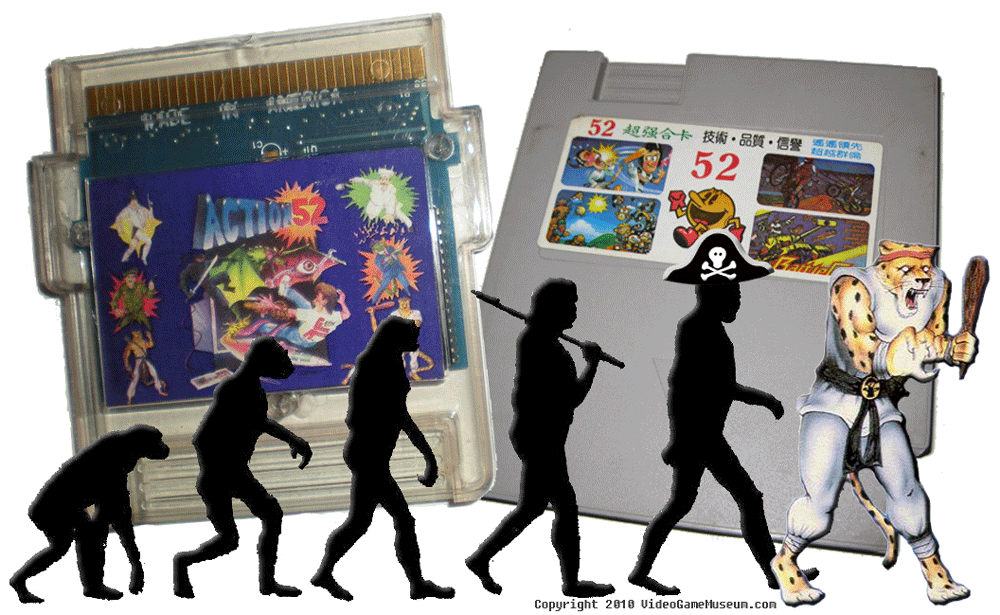
Curious how the Action 52 evolved to its present glorious form?

The Action 52 is one colorful NES game. Given its shady past and foggy history, NES collectors seem to have a love/hate relationship with the Action 52. If you’re unfamiliar with the Action 52 or the the fact that a man by the name of Greg Pabich recently realized he’d been sitting on the only known Action 52 prototype, then check out my previous articles (Articles 1 & 2)! My second article on the Action 52 covers the game’s outer appearance, a bit of Action 52 history, and the story on how Pabich acquired his prototype version. This article focuses on a new screenshots that Greg Pabich sent over for my feedback. What I found was fascinating!
Introducing: ACTION GAMER!

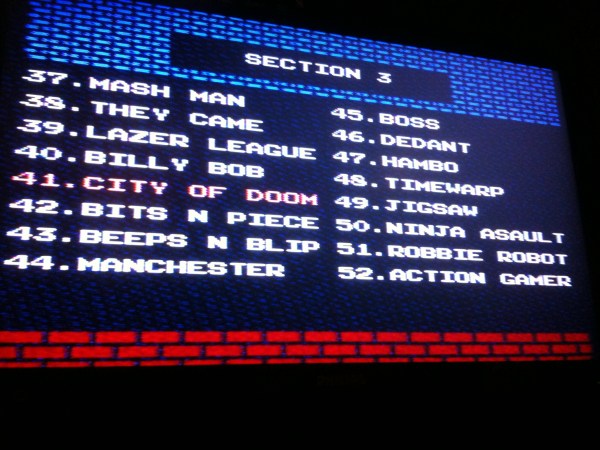
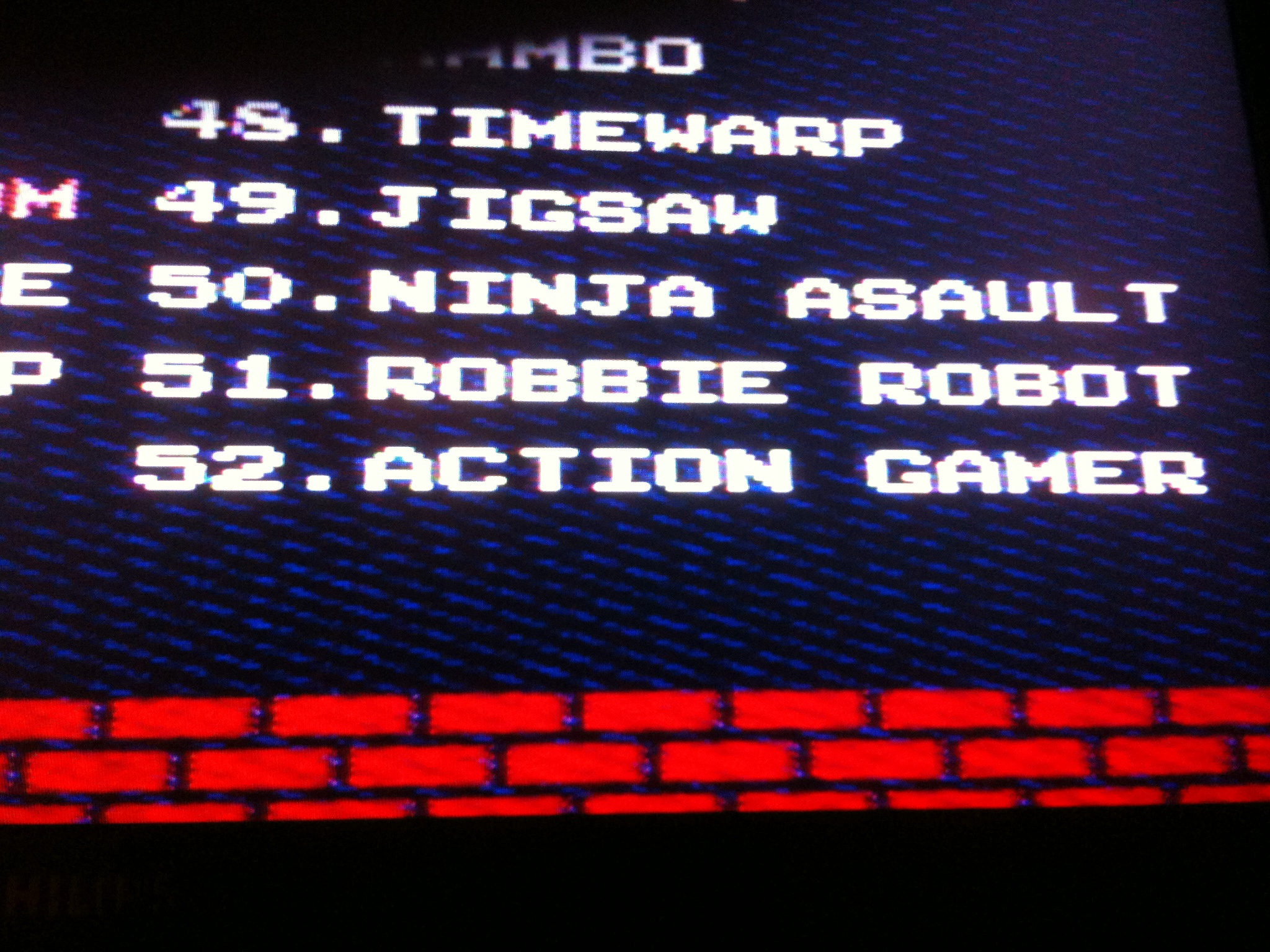
First off and most significantly, Pabich’s prototype Action 52 cart contains a game named “Action Gamer”!  This newly discovered game resides in the esteemed game spot number 52. The release version of the Action 52 places their flagship game “Cheetah Men” as game number 52. Thus, the presence of Action Gamer in that slot raises quite a bit of curiosity! What’s action gamer? In his e-mail Pabich stated the following:

The game is completely different than any known CHEETAHMEN.

I AM STILL WORKING TO GET BEYOND LEVEL 1, A TESTAMENT TO MY SKILL LEVEL(POOR) AND THE FACT THAT THE GAME IS HARDER THAN ANY OTHER VERSIONS OF CHEETAHMEN I HAVE SEEN.

I haven’t seen Action Gamer yet, and I’m excited to see screenshots of it. As I write this, Greg and his kids are still trying to beat the first level in order to provide more info on differences. Additionally, he explains:

Putting my son in law and daughter to work on the New CHEETAHMEN game has so far had the same results; they haven’t advanced beyond Level 1 either. They keep laughing saying it’s NOT THAT HARD, but they get blown away every time they play it.

Pray that the Pabich family beats level one so we can see some more screenshots!

How did the Action Gamer get its name?

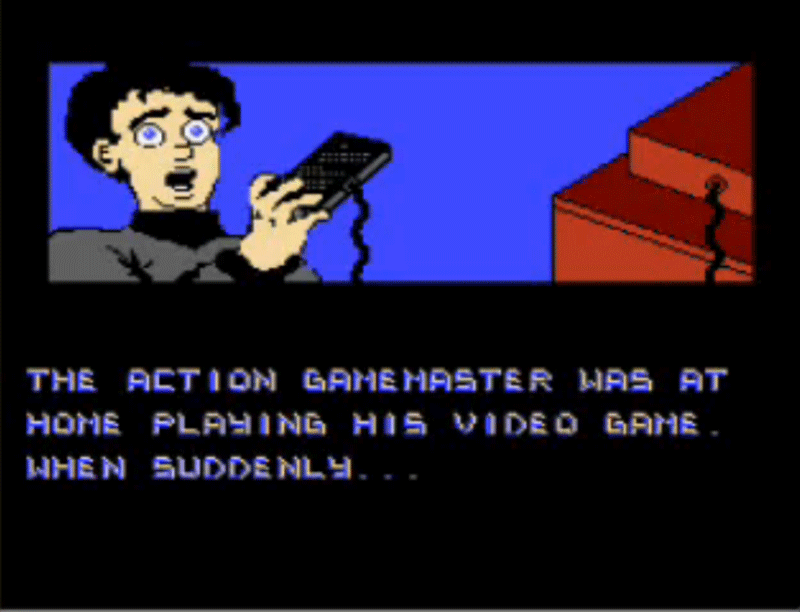
For the time being, my best way to make sense of the title Action Gamer is based on the intro credits for the game Cheetah Men from the release version of the game. Notice that the during the intro sequence, the character who gets sucked into the TV screen is referred to as Action Gamemaster. That title could easily be shortened to Action Gamer. So my best guess is that Cheetah Men originally had the working title of Action Gamer.
Why did Vince Perri name his game Action 52?

Before knowing about “Action Gamer,” I think people generally answered this question by saying that there were a lot of action (mostly shooter) games on the Action 52. Thus, it would make sense to call it Action 52. I would have agreed with that until I learned about Action Gamer. Now, my best guess it that Vince Perri, the illusive creator of the Action 52 and owner of Active Enterprises, simply combined the “Action Gamer” title and the fact that there are 52 games on the cartridge.

How did Perri create the Action 52?

We’ve always known that the Action 52 was one of the worst collections of video games ever assembled on one cartridge. Other multi-carts existed at the time, but they generally contained clearly pirated copies of popular licensed games. What’s unique is that the Action 52 contains 52 supposedly original games. Sure they were largely thrown together, unpolished, and so bad that they?re often unplayable. Sure they borrowed strongly from other licensed games, blatantly stole music from other sources, etc., but it seems Active Enterprises did have a person or team trying to create original games.

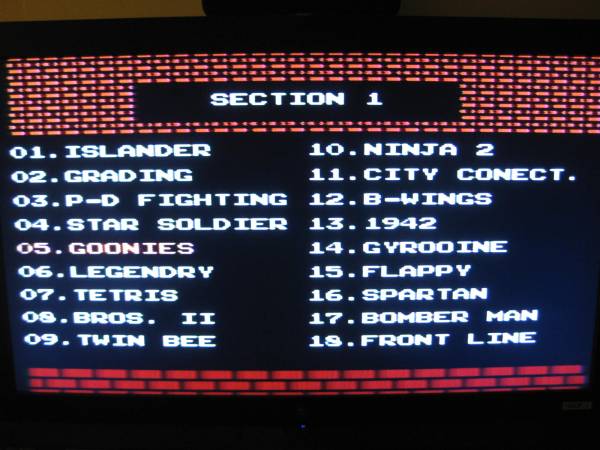
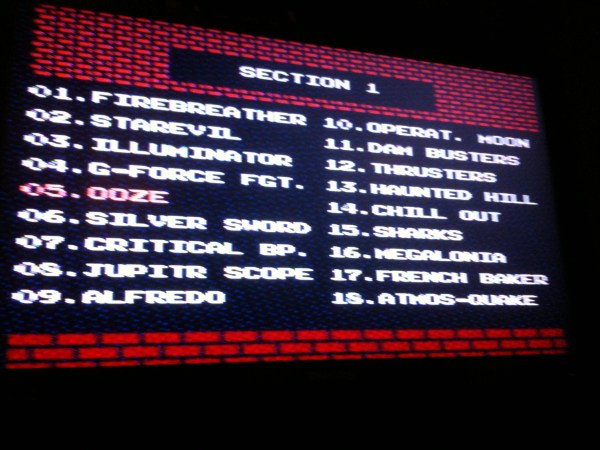
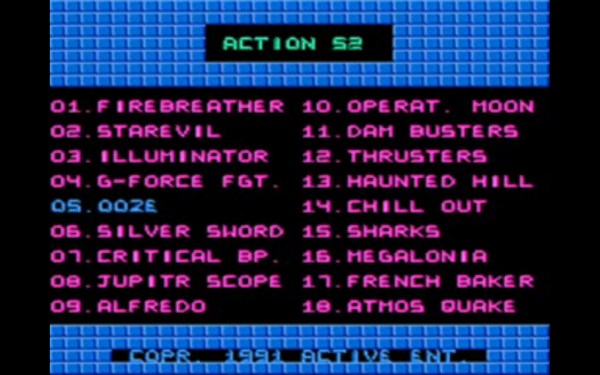
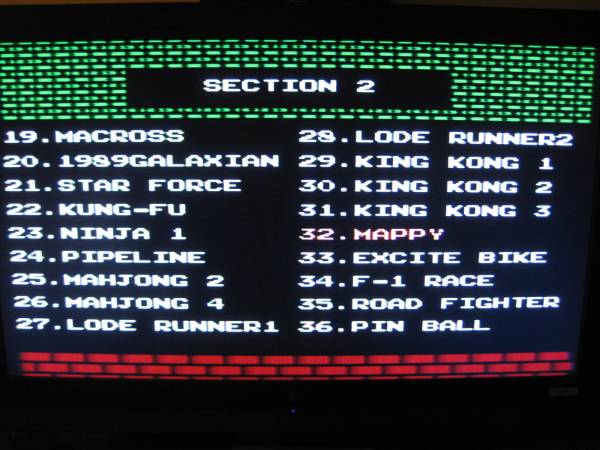
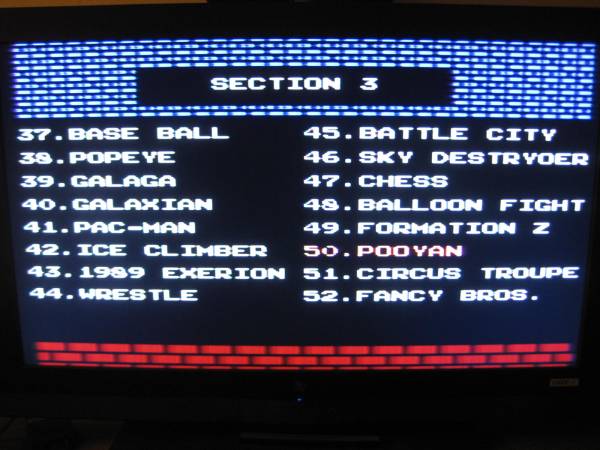
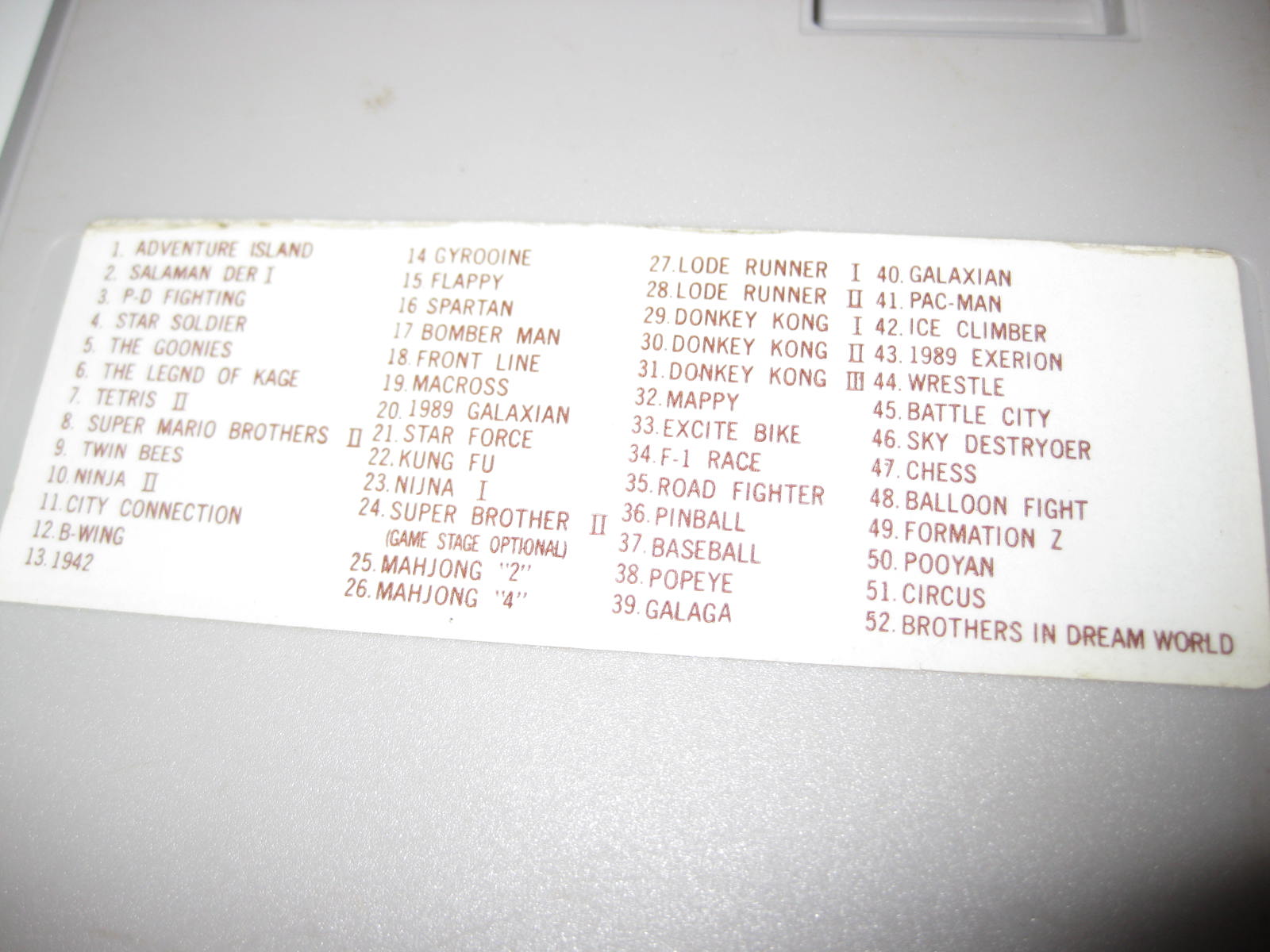
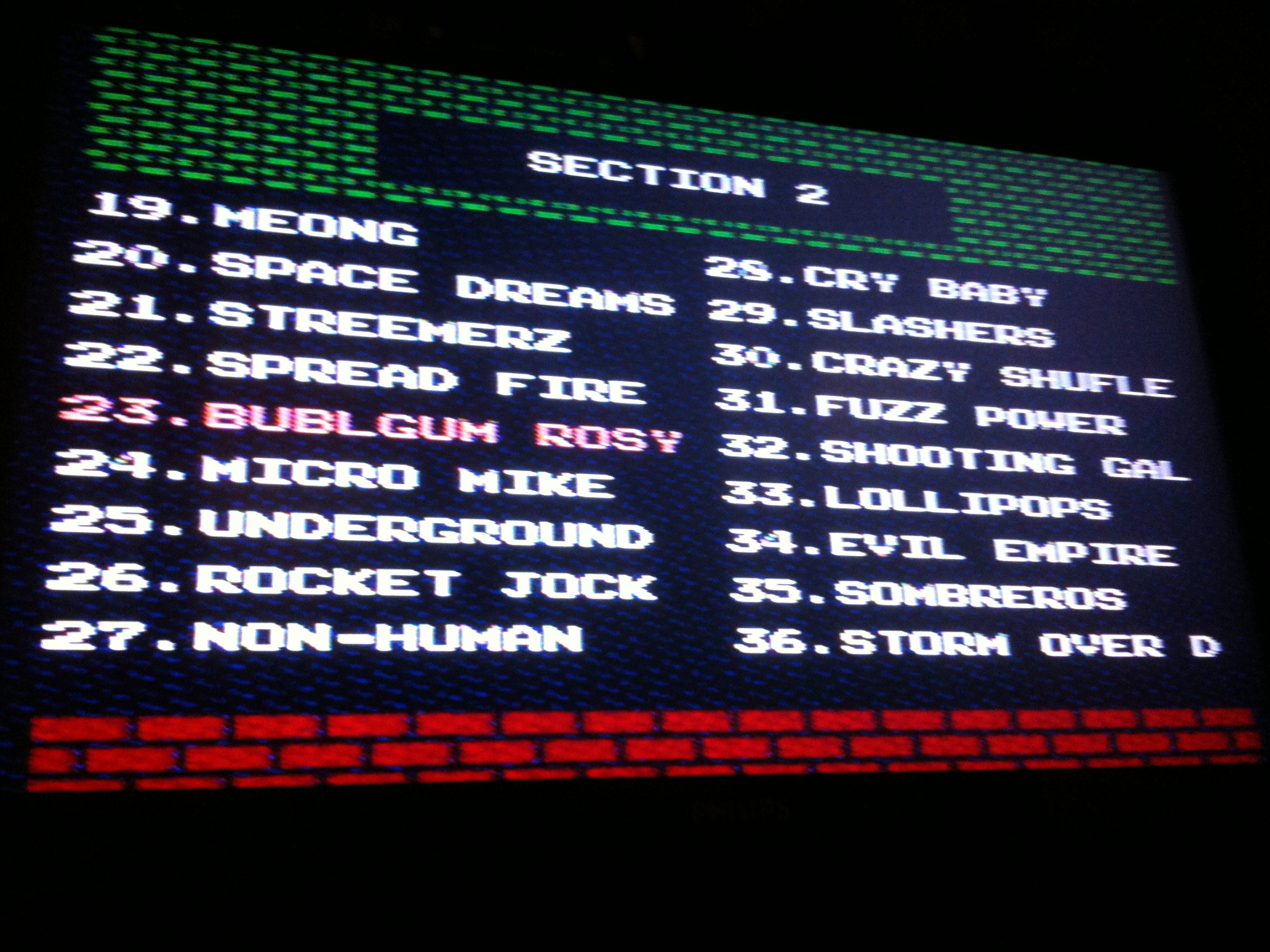
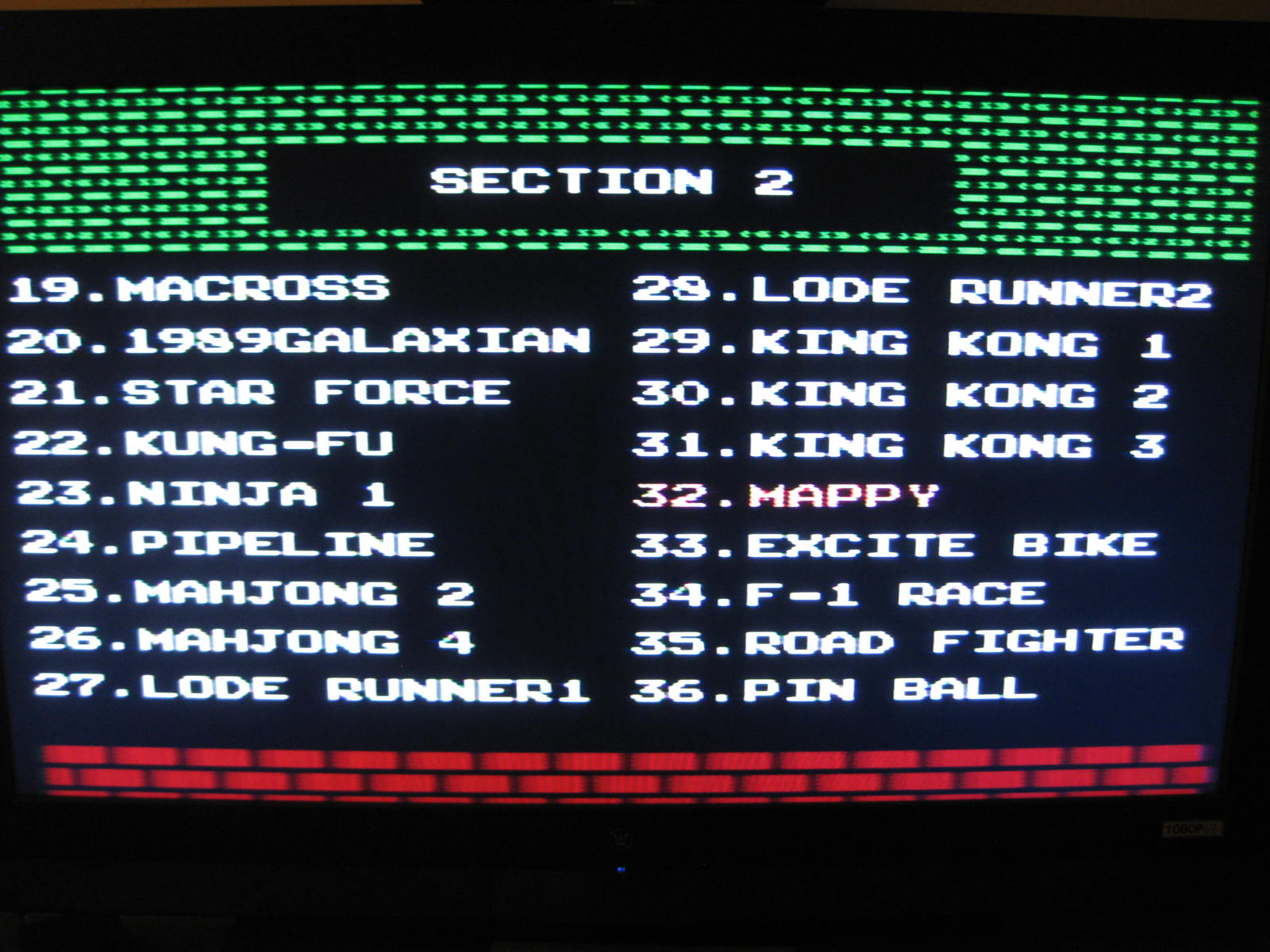
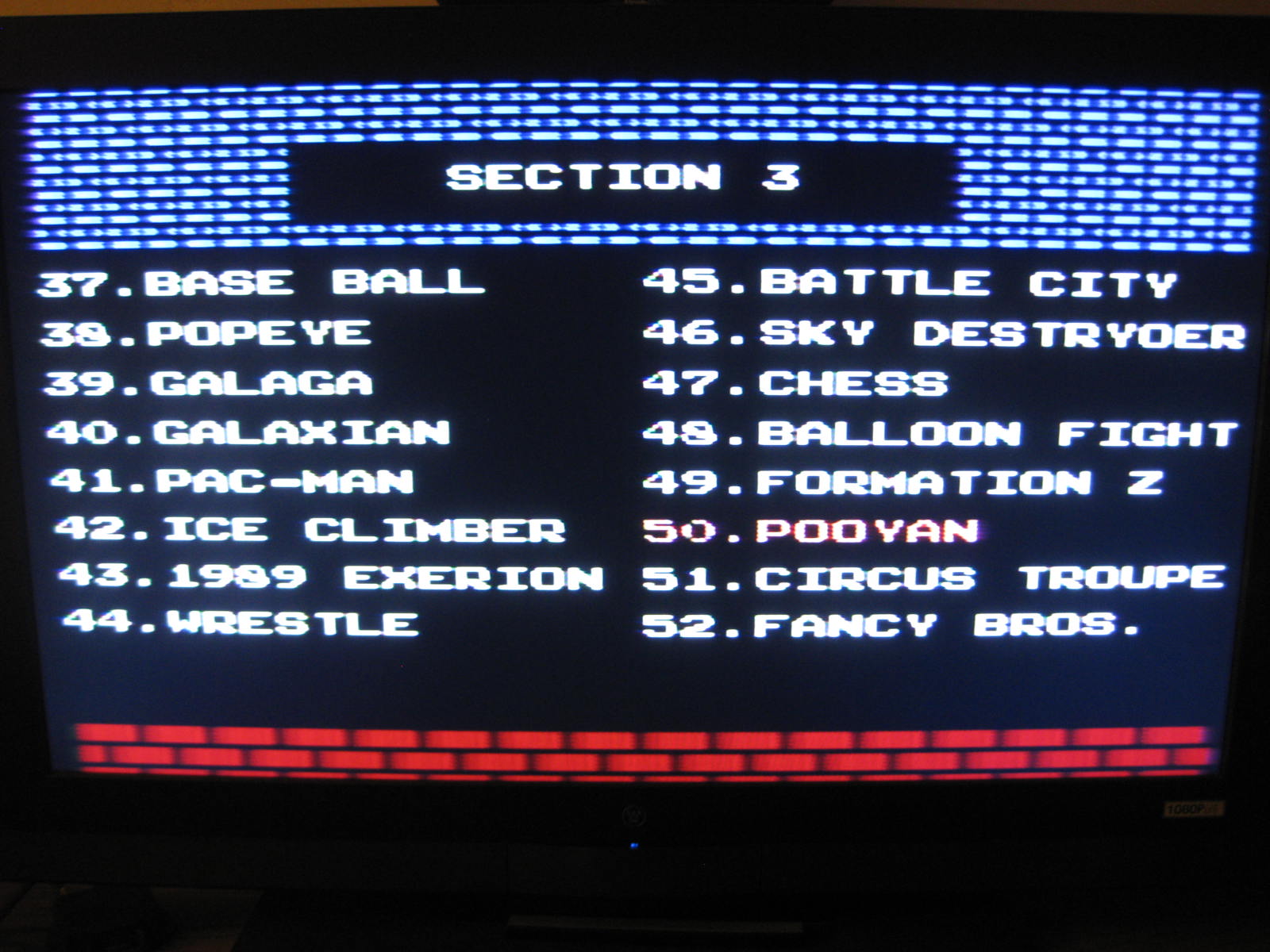
That being said, people have previously compared the menu screens of the release version of the Action 52 to those of 51-in-1 NES pirate multi-carts. The two seemed strangely similar. Both obviously contained 52 games (18 on menu screen 1, 18 on screen 2, and 16 on screen 3). Although the background patterns were different, the layout template was to- similar to go unnoticed. And even the menu’s functionality and sound effects were the same. The two were just too similar…

Now that we have knowledge and photos of Pabich’s prototype, the similarities are 100% undeniable. A side-by-side comparison of the prototype’s and pirate’s menus shows identical background, layout, header titles, etc. For me, it’s pretty clear that Perri pirated a pirate cart in order to make the menus for his game. (If you steal from a thief, that’s ok, right?)

Have you ever wondered why the Action 52 game menu starts with game “5. Ooze” selected? Simple, that’s because the pirate cart’s menu was programmed that way, and no changes were made to that portion of the code after Action 52 copied it.

What’s also interesting is that his team at Active Enterprises was able to manipulate the pirate’s menu enough to change its background and to add its own header and footer text. However, he made zero changes to the number of games on the cart. If you were Perri and were struggling to create or compile of list of 52 games of questionable quality, wouldn’t it just be easier to rewrite the menu for fewer games?

Feel free to take a closer look at screenshots of the menus to see the similarities for yourself.


 So what are the menu differences between the Prototype and the Release versions of the Action 52?

PROTOTYPERELEASE
Game: “18. Atmos-Quake”Game: “18. Atmos Quake” (No Hyphen)
Game: “27. Non-Human”Game: “27. Non Human” (No Hyphen)
Game: “52. Action Game”Game: “52. Cheetah Men”
Header Title: “Section #”Header Title: “Action 52”
Footer: No text.Footer: “Copr. 1991 Active Ent.”
Background: Mario-styled bricksBackground: Tetris-styled bricks
Font: WhiteFont: Pink
Font of Selected Game: PinkFont of Selected Game: Matches background

It’s also odd that Active Enterprises made a few changes to the menu, but they didn’t catch the spelling errors.

Which came first the Action 52 or the 52-in-1 Pirate Cart?
While geeking out over these comparisons yesterday and discussing them with a fellow retro gamer, aka my wife, she asked a good question: How do we know that Perri copied the pirate cart? Couldn’t the pirates have copied the Action 52? It’s a good question. Given the foggy history surrounding both the Action 52 and pirate carts, we don’t have an exact production date on either. Thus, it becomes a chicken-or-the-egg question.

However, given the fact that Greg Pabich got his hands on an Action 52 prototype that wasn’t in circulation, we have a snapshot into the development of the Action 52 at a specific time. That snapshot matches the 52-in-1 pirate cart’s menu. Additionally, we can see that the production Action 52 menu differs from the 52-in-1’s menu. Thus, it’s fair to reason that the Action 52 was originally working off of code taken from the 52-in-1.

Furthermore, it’s unlikely that the software pirates who made the 52-in-1 got ahold of a copy of the Action 52 prototype in order to copy its menu. It’s much more likely that Active Enterprises got their hands on a 52-in-1 (which were in circulation), dumped, and reworked the code for the Action 52.

Finally, if pirates had gotten a hold of the Action 52, it’s likely that they would have used a much more accessible production model. And if that were the case, we’d probably see a menu that looks more like the Action 52?s release version menu on the 52-in-1.

Conclusion

Thus, it’s fair to reason that Active Enterprises pirated the 52-in-1 pirate cart. The evolution of gaming is an interesting thing, and it seems clear that licensed games gave rise to pirated games which gave rise to the beloved and despised Action 52!

To Be Continued?

Since the Pabich family is currently working through Action Gamer in order to identify and document differences, I’m waiting on game screenshots, but I’ll let everyone know as soon as I receive them.

In the meantime, here’s my list of questions for Greg Pabich:

  1. Do the loading screens for your prototype Action 52 cart match those of the release version? How about the music?
  2. Does the Action Gamer game still feature the Cheetah Men or is it a totally different game?
  3. Does the Action Gamer cartoon intro sequence match that of Cheetah Men?
  4. Have you noticed any other differences between those two games?
  5. Have you noticed differences in the game play of any other games? (I’m sorry that answering this question is probably a dreadful project/request since even the release ones were mostly unplayable.)

Feel free to take a closer look at all the photos and to contact me with your feedback or to leave it in the comments section below. And, many thanks to Greg Pabich for providing these great photos and a closer look at his Action 52 prototype. Thanks!

What’s Rarer: A Prototype Action 52 Cart or a Person Who’s Met Vince Perri?

You have to respect a guy who does his research when it has to do with retro-gaming history! Greg Pabich contacted me a few weeks ago wanting to identify a couple of old Action 52 cartridges that he’d been keeping in a box for the last two decades. It’s quite clear that Greg’s been doing his homework, so I figured he should get the proper recognition for it.

In case you’re unfamiliar with the notorious Action 52 unlicensed cart for the original Nintendo, the back story is possibly just as, if not more, interesting than the games themselves. A guy by the name of Vince Perri ran a company named Active Enterprises LTD what was partially based out of Miami, FL and partially based in Nassau, Bahamas.? History of Active Enterprises is quite hard to come by. They made the Action 52 for the NES in 1991 and for Sega Genesis in 1993, produced Cheetahmen II using recycled carts from the Action 52, and then disappeared. In fact, they actually disappeared before Cheetahmen II ever hit the market, thus making the 1996 discovery of about 1500 Cheetahmen II carts a huge surprise to the gaming community.

Using some good old fashioned sleuth work, Andrew Harris at “The Warp Zone” attempted to contact Vince Perri to find out the history of Active Enterprises. Yet, strangely, each person he contacted gave him the identical “WHY DO YOU WANT TO KNOW THIS?” response. Perhaps each was Vince Perri answering separate e-mail addresses with different aliases.? Or perhaps it was just a coincidence, but Vince Perri seems defensive enough that one can only wonder what he’s hiding. Did he think Jason was a lawyer digging up a cold case or perhaps that Jason was someone to whom Mr. Perri owed money? Who knows, maybe he was just shy.

Years passed with nothing but silence on the history of the Action 52, and then I got an e-mail from Greg Pabich.? During the 90s, Pabich owned a video and game distributorship.

I owned a very large preplayed movie and game distribution business located in Dallas, TX. I set up the game buy back/trade in programs for Babbages, Toys R Us, Software, Etc. and others. We also built the opening store inventory (movies and games) packages for the Blockbuster franchisees in North America, Hawaii, Mexico, Canada, Panama, ETC, ETC See: http://www.inc.com/magazine/19971015/1482.html

During the course of his business dealing, Pabich was contacted by none other than Vince Perri.? Vince had a pitch and invited him to Miami to discuss it.

I was introduced to Vince Perri, one of the owners of Active as a potential U.S. distributor of the Action 52 cart. I went to Florida in either late 1990 or early 1991 to discuss the “deal.” He had a large warehouse/office building and appeared to be a legitimate business. I was discussing the purchase of many 1,000’s of games and it involved a tremendous amount of money. In a business like I was in that was full of con artists, I was wary because I was told the carts were going to be assembled “offshore”–the Bahamas according to Perri–and that they must be paid for in full–IN ADVANCE!

He did not have pallets of finished games in evidence, only a handful of what he called “Prototypes” of which I returned with one (which he was very reluctant to part with). There were employees and activities going on (mock ups, advertising posters, promotional stuff, etc) and Active appeared to be a real business. He never mentioned any partners.

We talked and talked, had dinner and I left Florida knowing that the deal was too shaky for me to risk a million dollar upfront payment being wired to the Bahamas…

In hind-sight, Mr. Pabich seems to have made a wise choice. Unless you’re a glutton for punishment, the Action 52 collection of games is a pretty horrible set of 52 mostly unfinished buggy games. From the game play alone, it’s no surprise that they went under. However, we can also see from Pabich’s account of the interaction that Active was shaky from the beginning.

Anyone familiar with Craigslist-based scams knows that you don’t wire or accept money wires (Western Union) from Nigerians offering to buy or ship an item for a too-good-to-be-true price. Perhaps the second most feared country for scams is the Bahamas. Luckily, Pabich chose the cup without the proverbial iocane powder. He didn’t put down the cash and, instead, walked away with a piece of gaming history: one of the earliest known Action 52 carts.

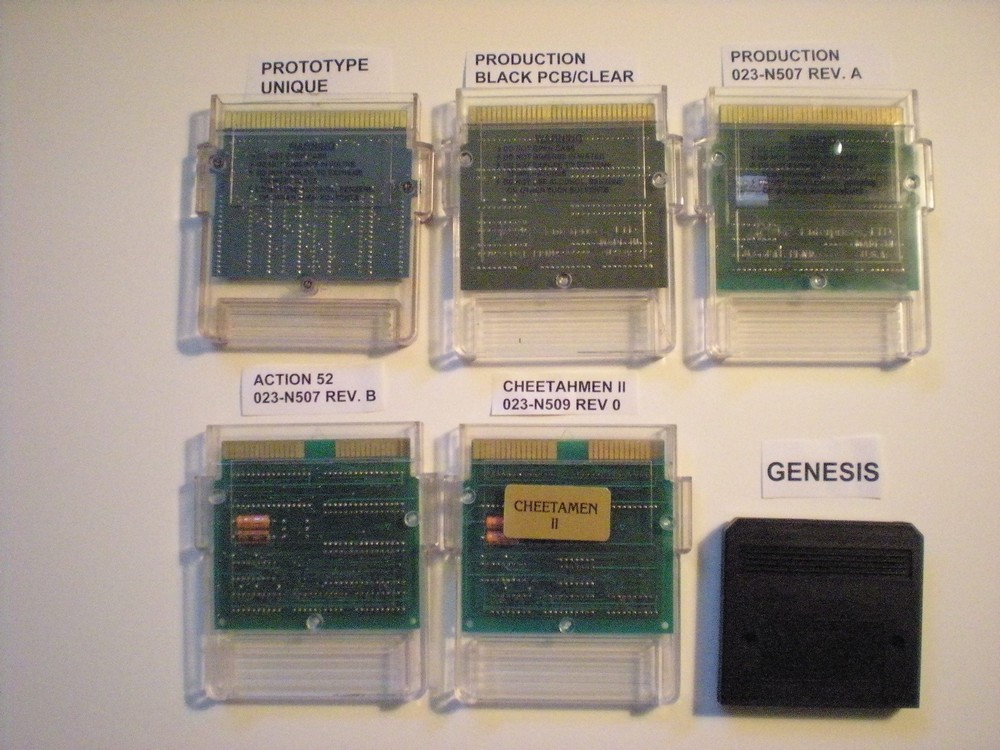
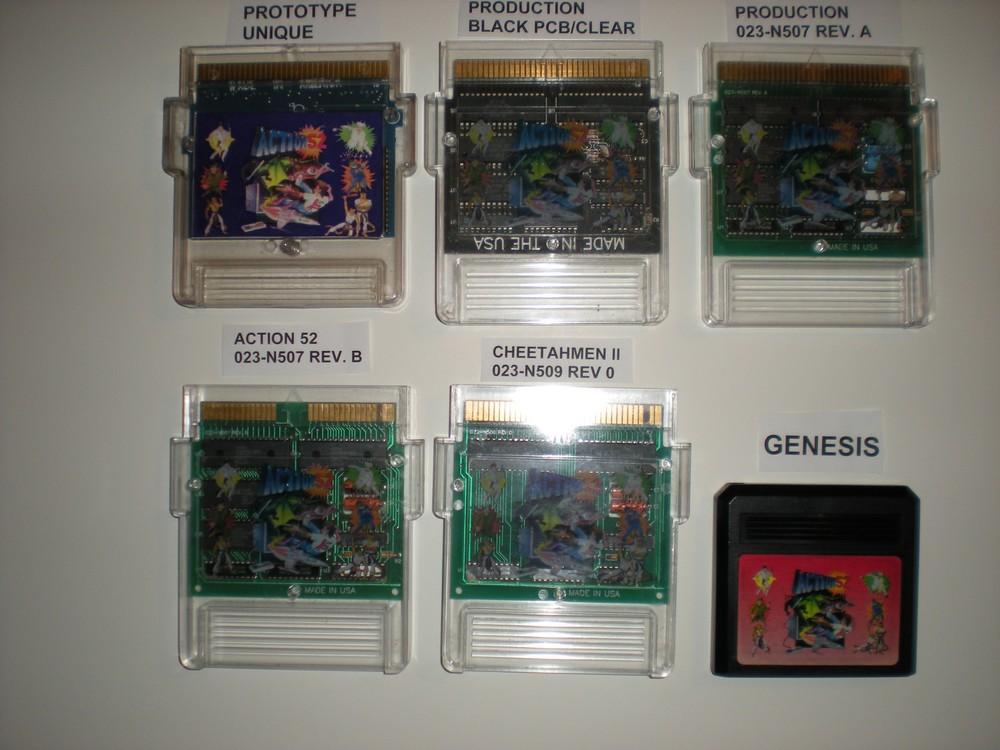
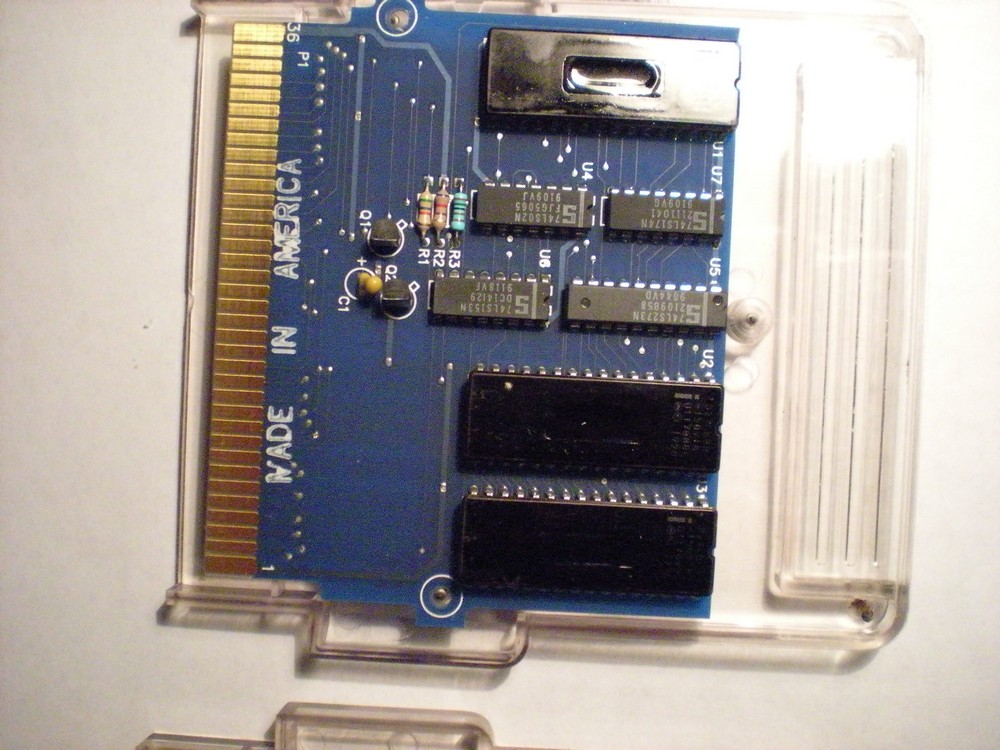
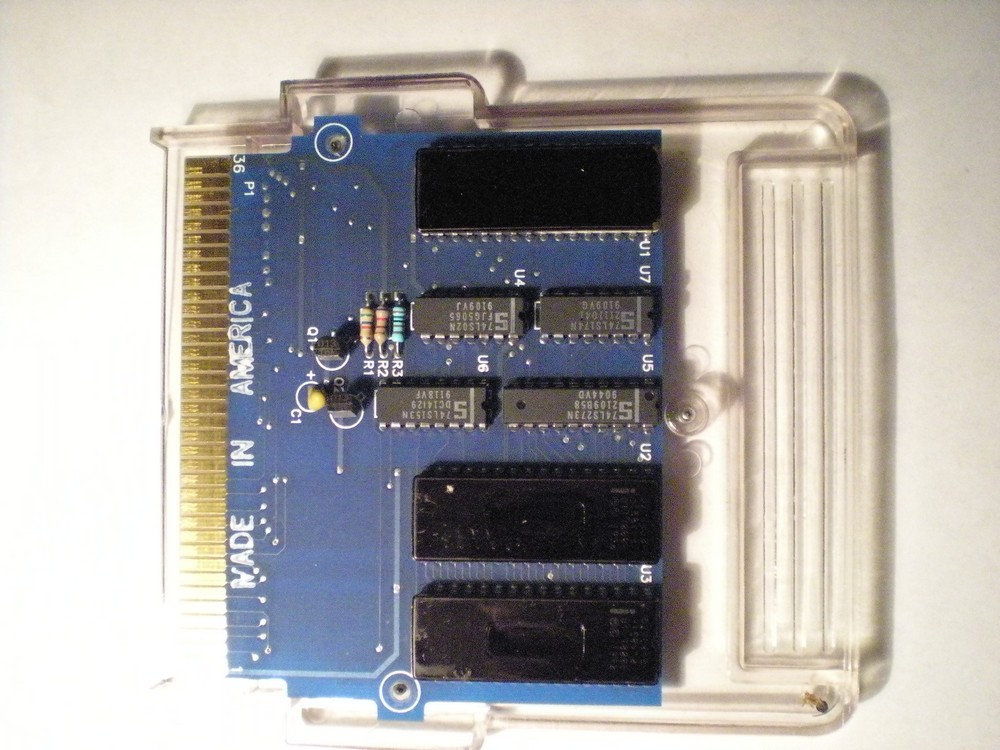
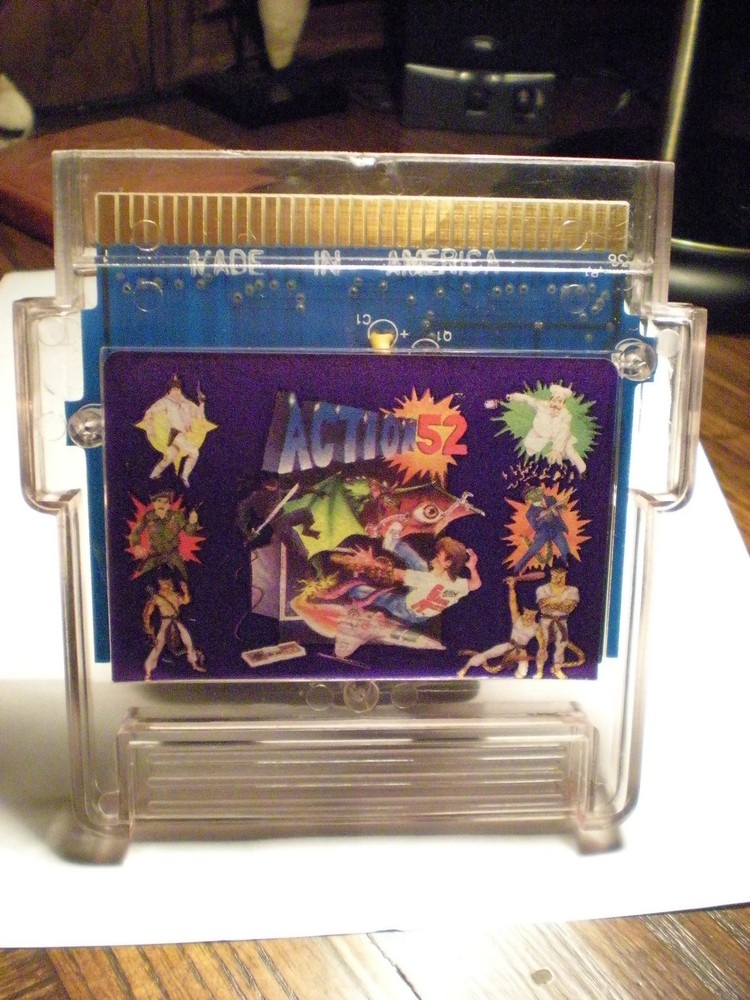
Although Mr. Perri isn’t here to verify the exact history of Pabich’s blue-boarded Action 52 cart, there’s a pretty good chance that it’s a prototype. Let’s take a look at the evidence to that point.

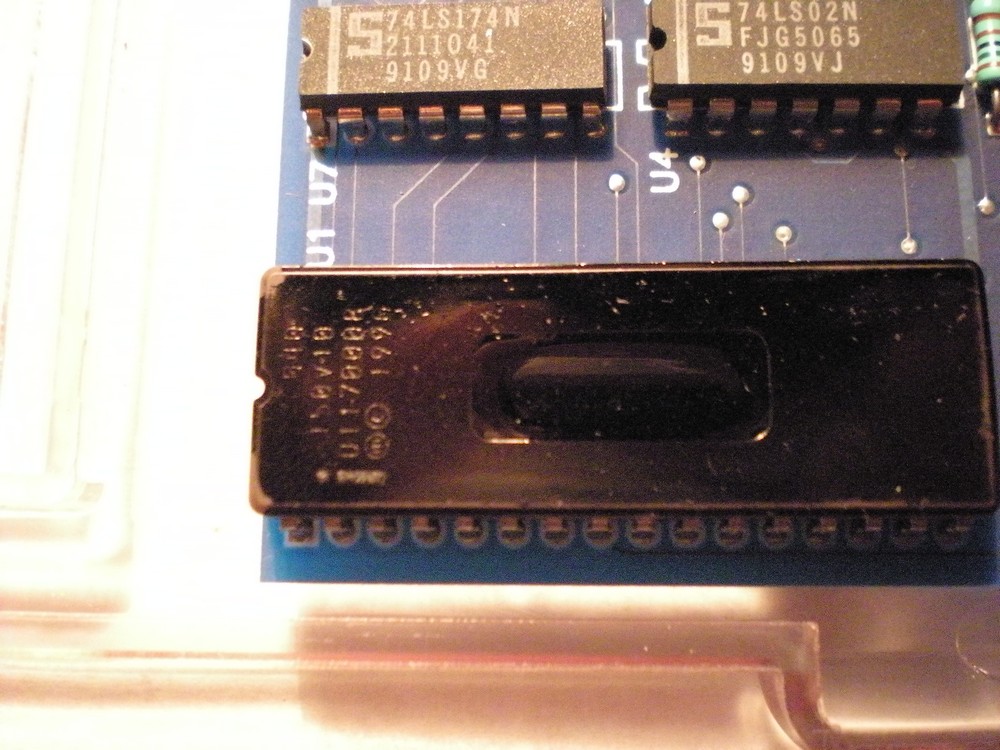
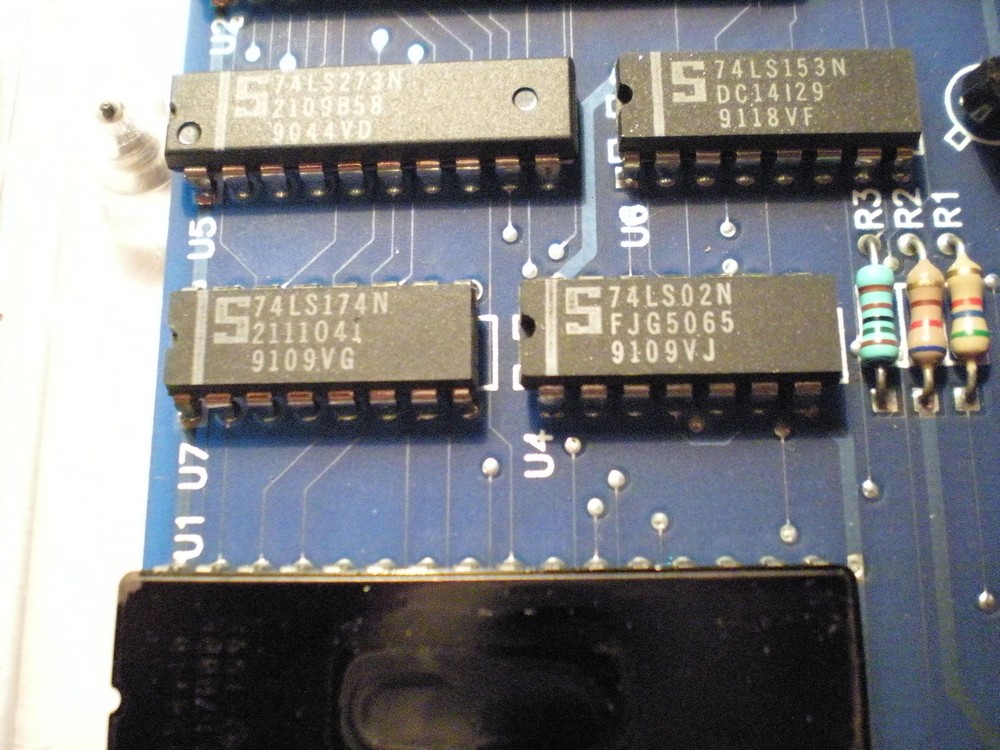
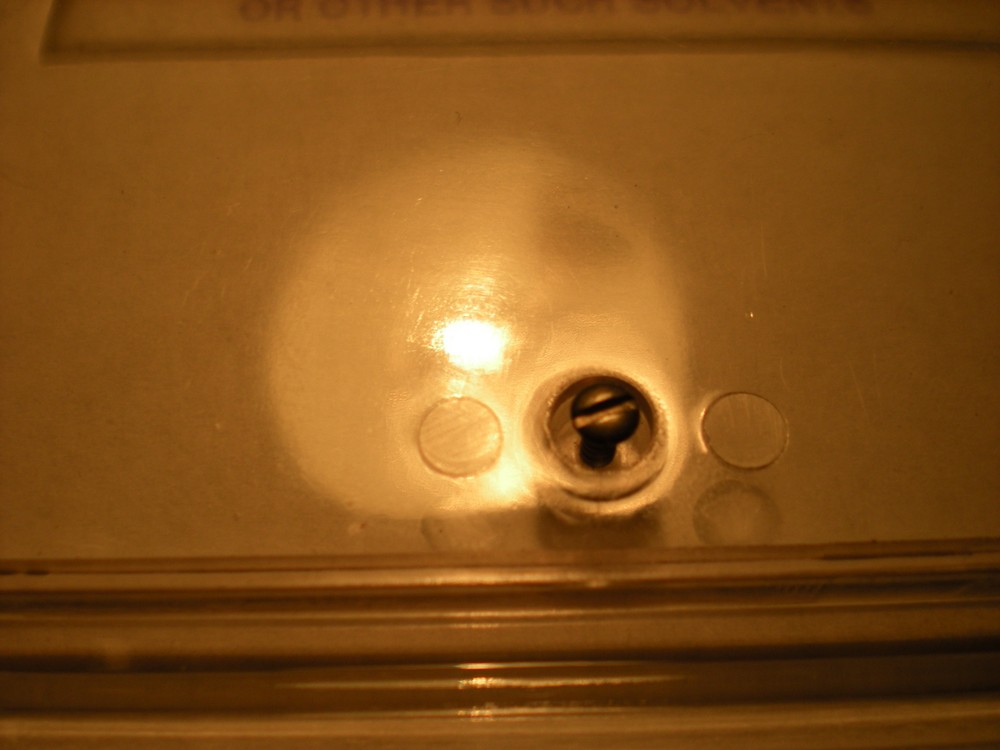
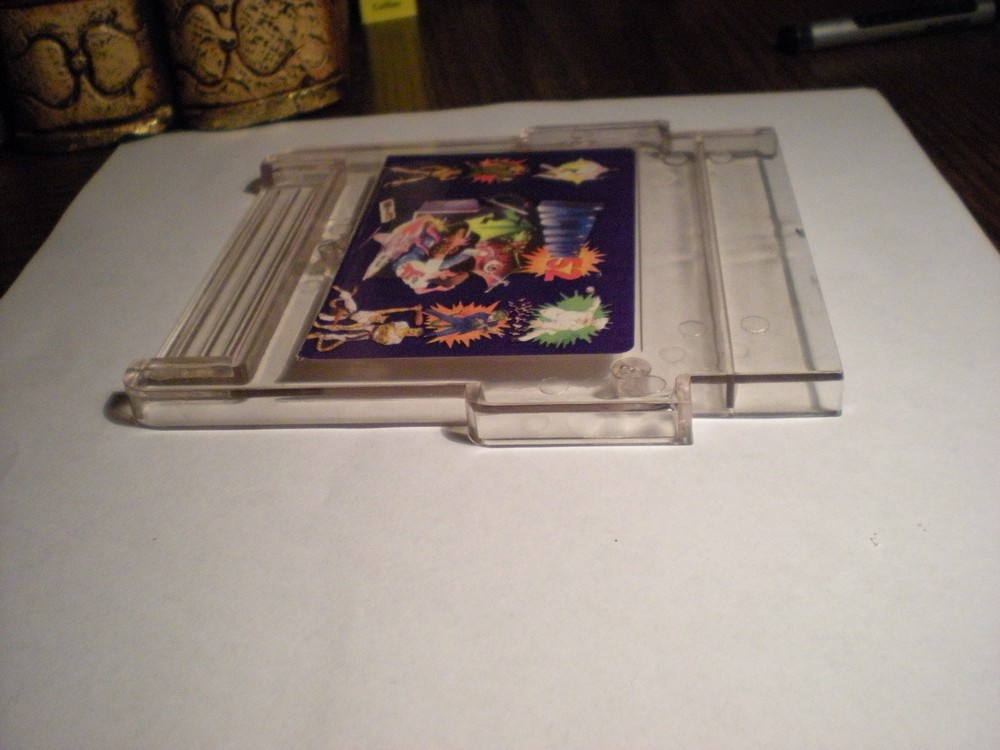
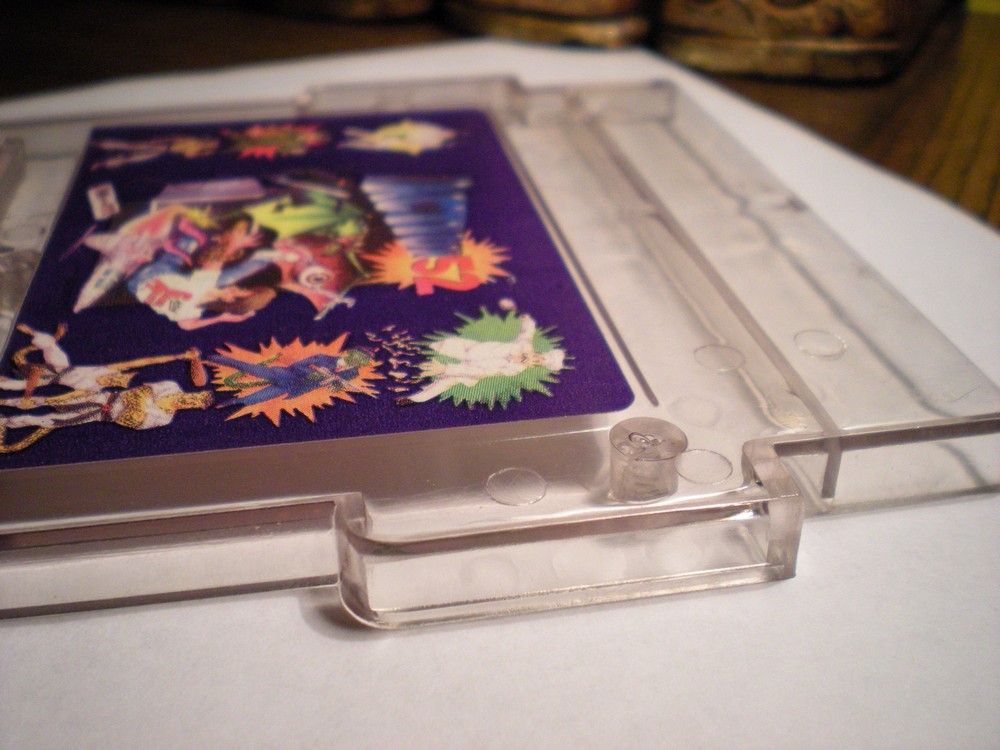
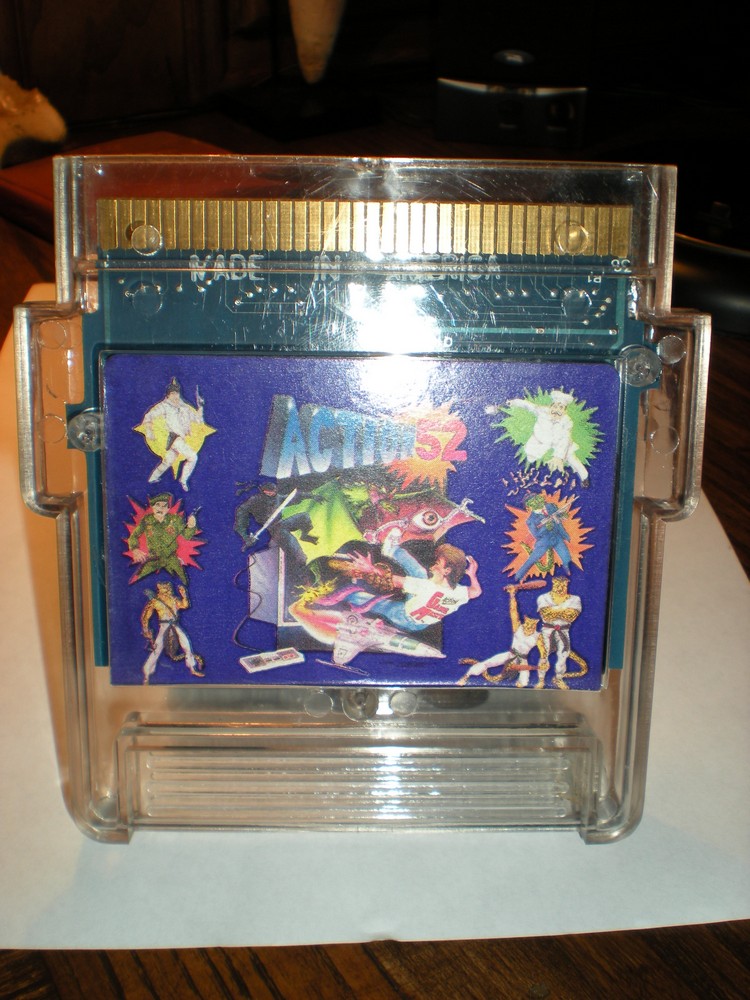
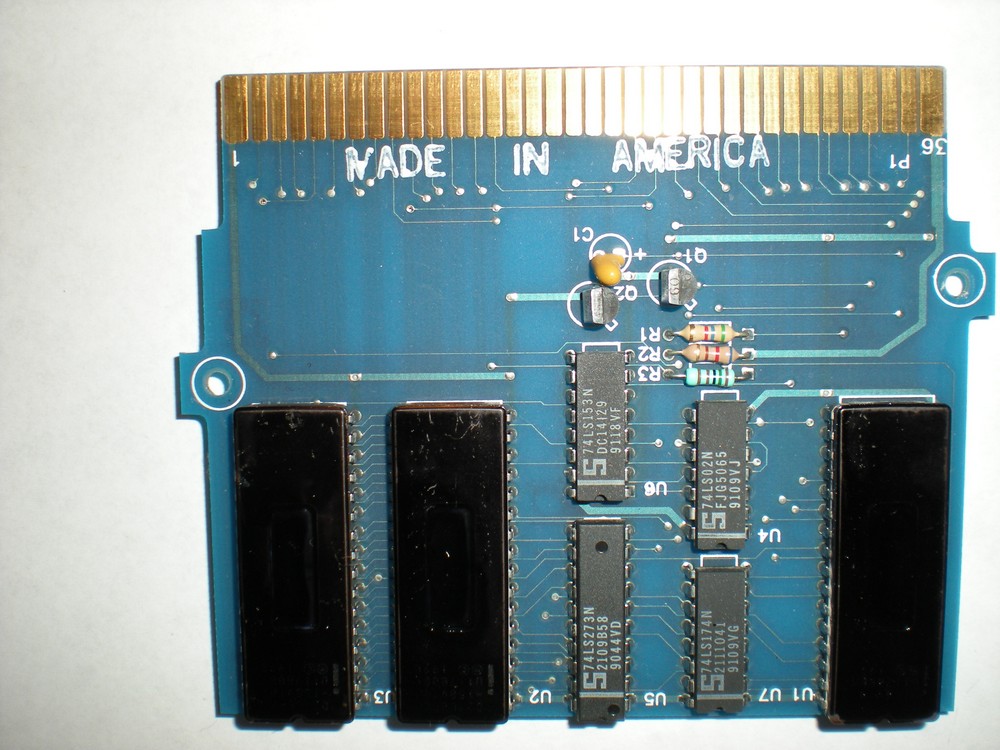
  1. The cart’s plastic casing is held together with metal screws. Most Action 52 carts contained no screws whatsoever and instead were held together with something like clear plastic rivets. It makes sense to start with hand-built prototypes that could be assembled and disassembled quickly by hand.
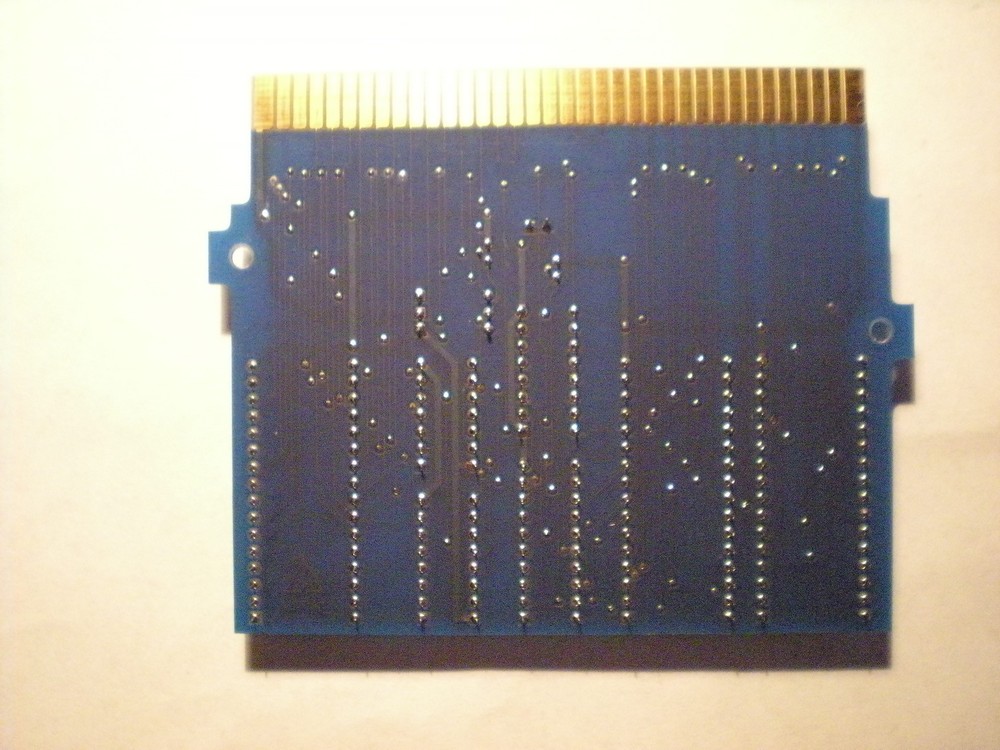
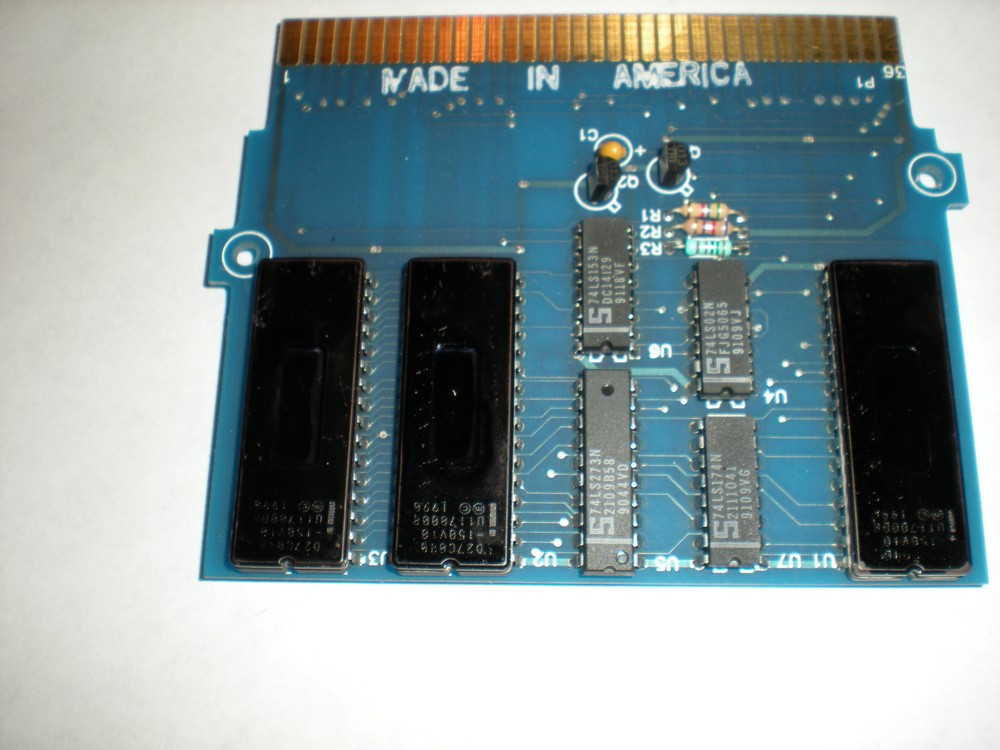
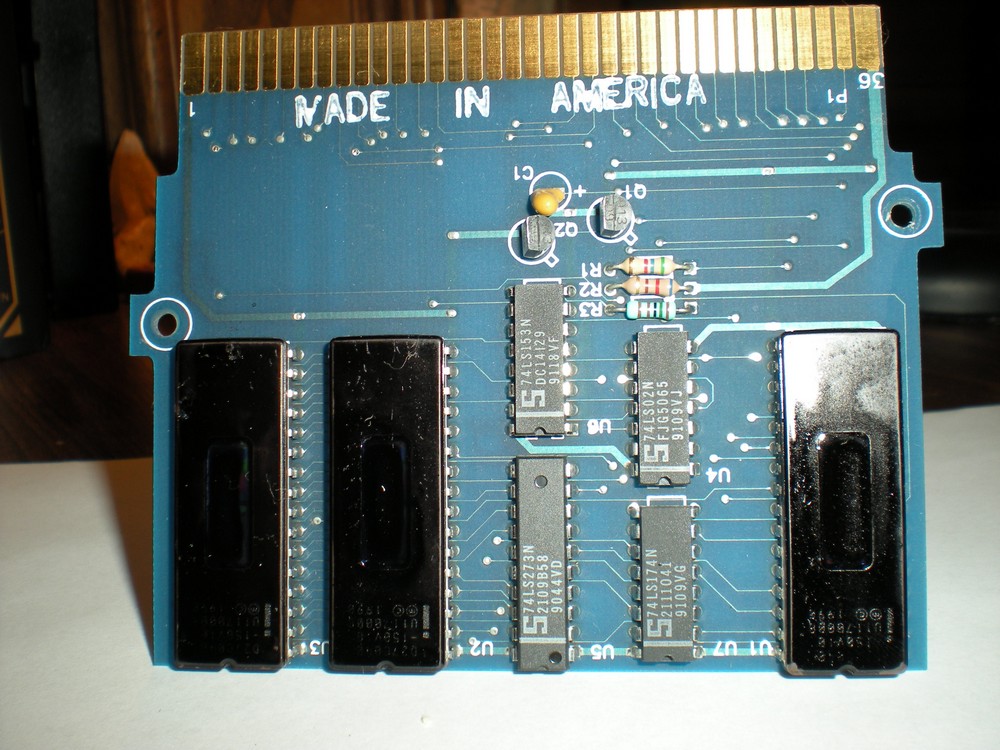
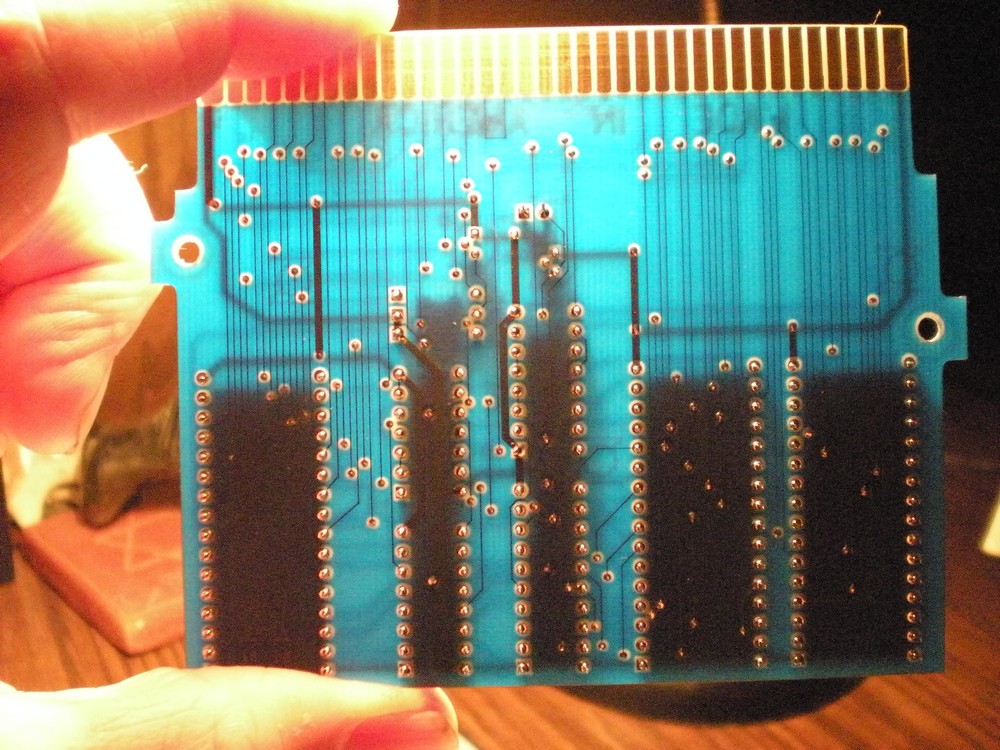
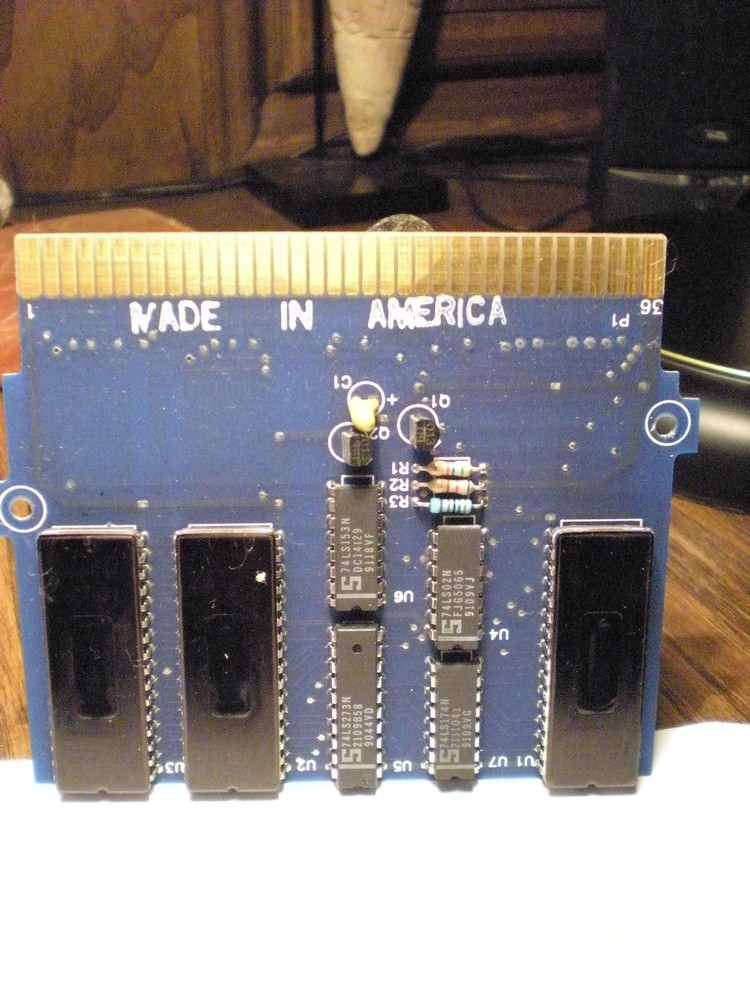
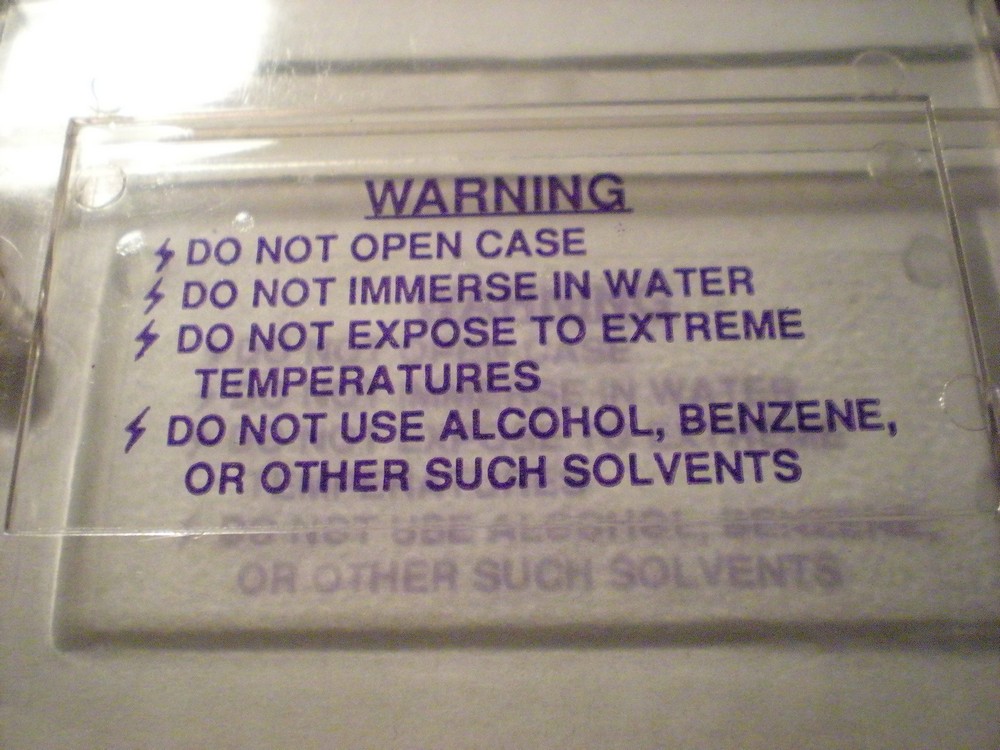
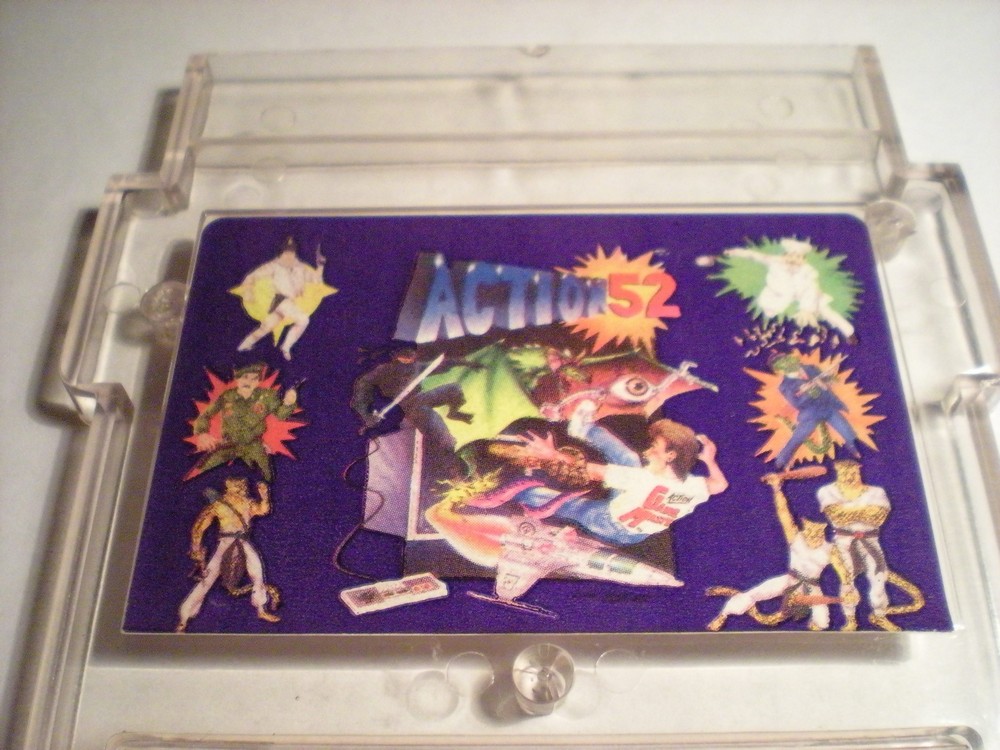
  2. The PCB (printed circuit board) is a unique blue color. Normally, they’re green and sometimes (although less commonly) black. The label is also blue, while all other known labels are clear.
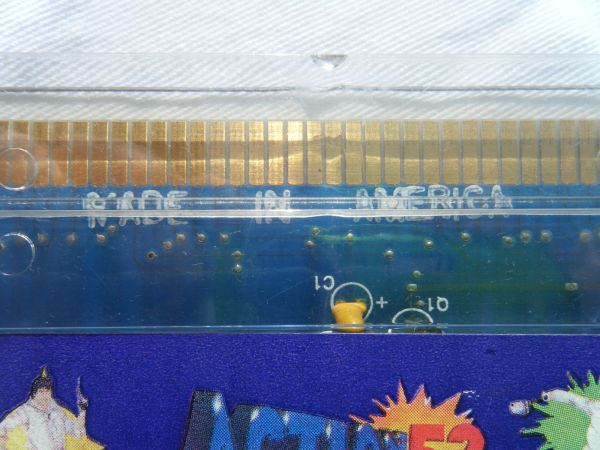
  3. “Made in America” appears to be hand stamped on the PCB (printed circuit board) rather than being factory printed.
  4. Board is 3/4 inches shorter than others.
  5. It does not utilize capacitors as do the other versions. The capacitor was generally used to defeat Nintendo’s lock-out chip and wouldn’t be needed in a prototype version.
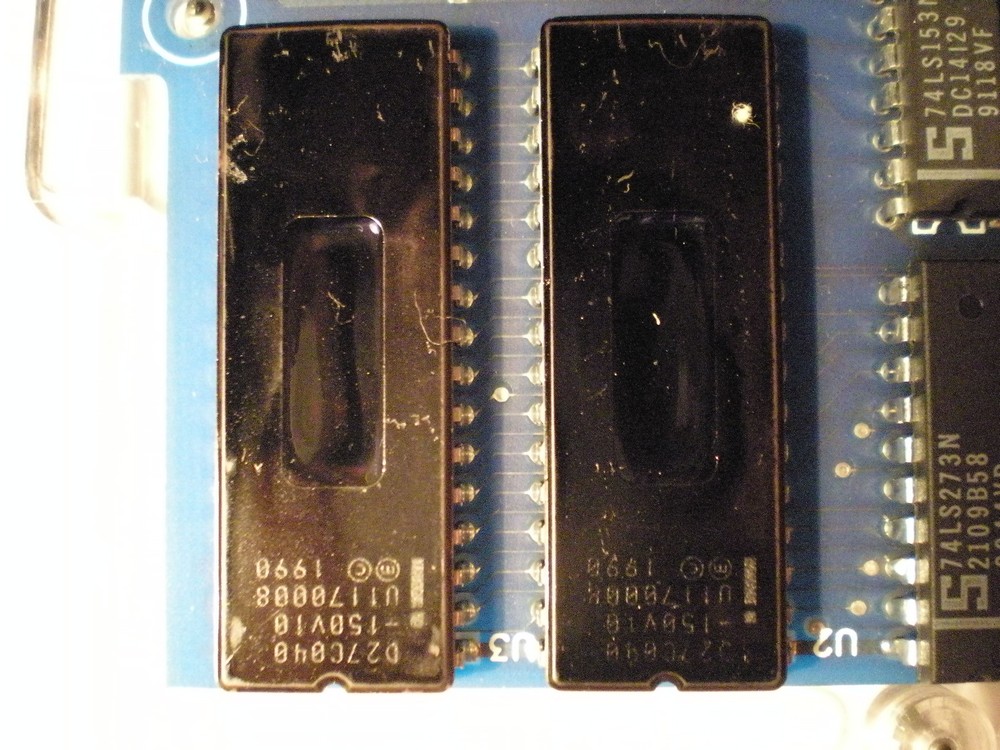
  6. The PCB has EPROMS and no production PROMS. The production carts contained PROMS that are labeled “ACTION 52” as all other production carts do.
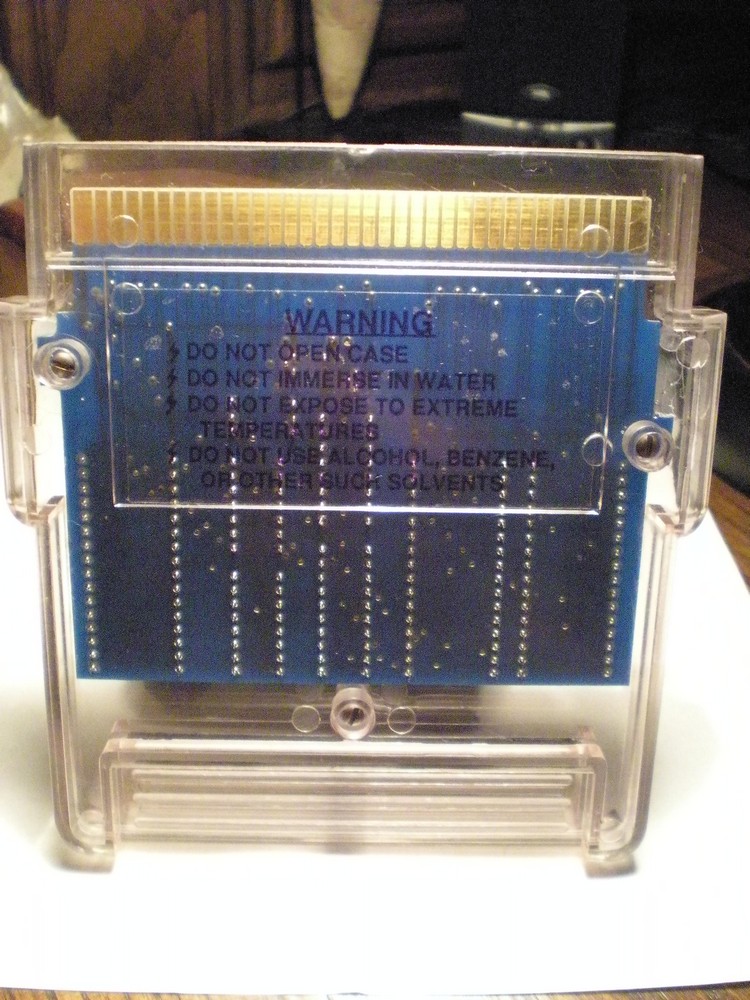
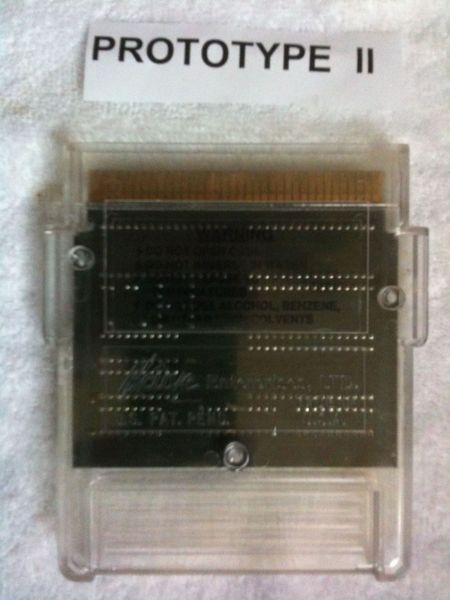
  7. Both pieces (top and bottom) come from different molds than the production carts. The arrow and the word TOP is missing on the front; all references to ACTIVE ENTERPRISES, PAT PENDING AND MADE IN U.S.A are missing from the reverse. The side flanges on the top piece are FLAT instead of curved.

“MikeSanders” (aka Andrew Harris) at Cheetahmen Corner and the guys at Nintendo Age give a good account of the unique nature of Greg Pabich’s cart. Putting all this information together, I have to agree with Pabich when he recalls Perri’s referring to the cart that he received as a “prototype.”

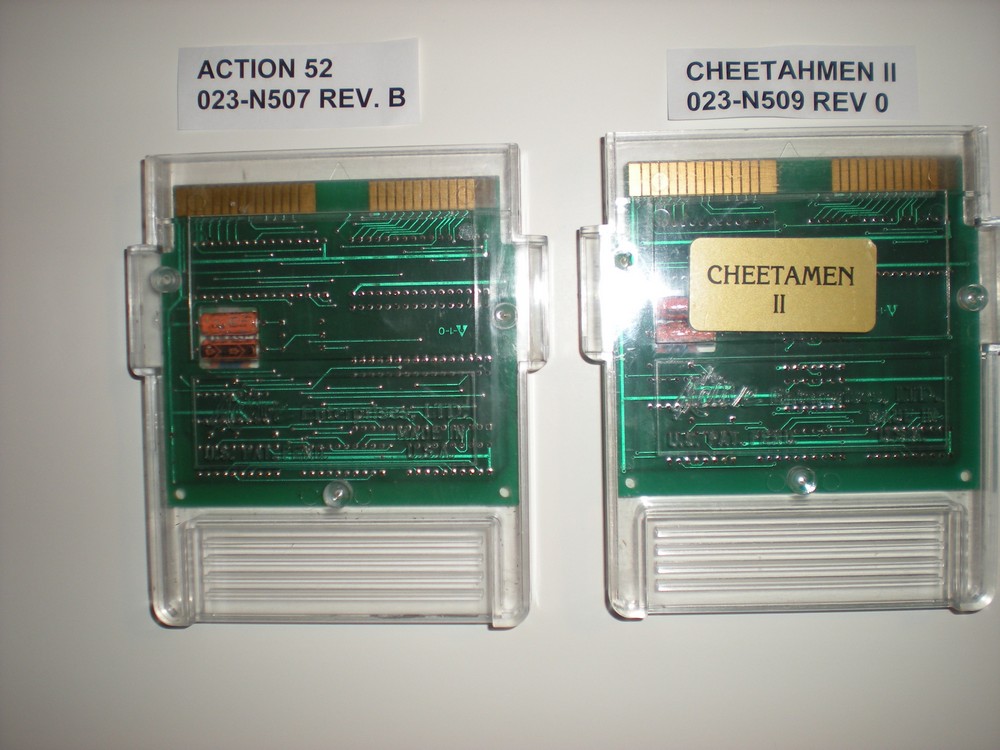
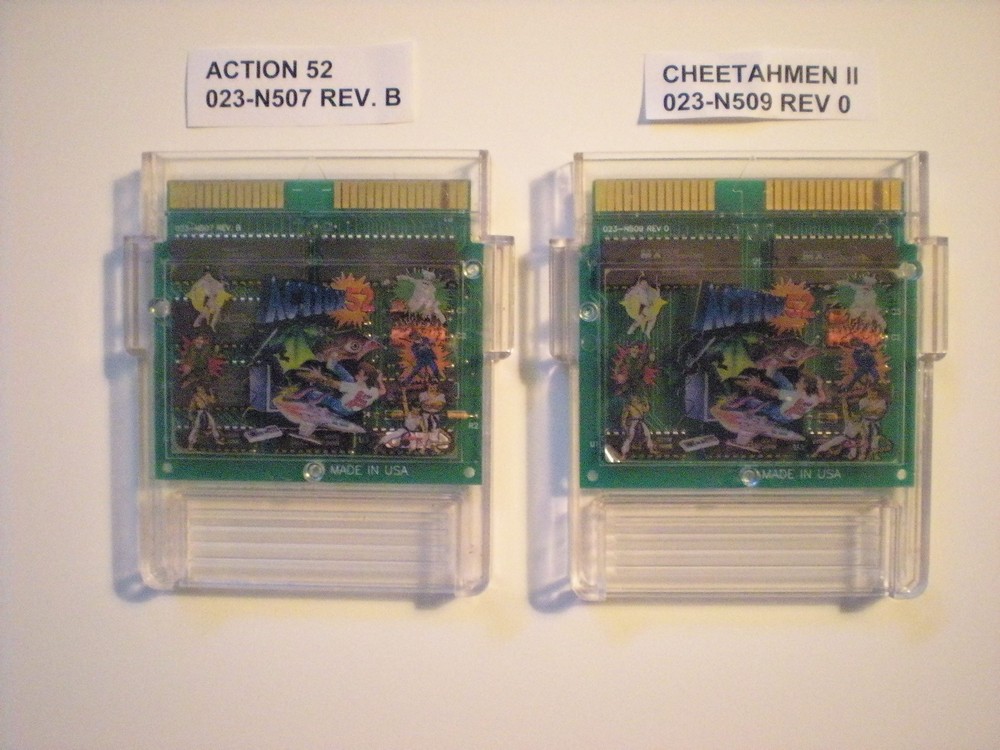
I also have to applaud Mr. Pabich for his time and effort in researching this cart. Clearly, he’s done his homework in trying to establish the game’s history. In addition to the original photos that he sent me (See my original post), I just received a fantastic batch of photos from him. In them, we have a rare side-by-side comparison of each variation in the Action 52 game that he could get his hands on.

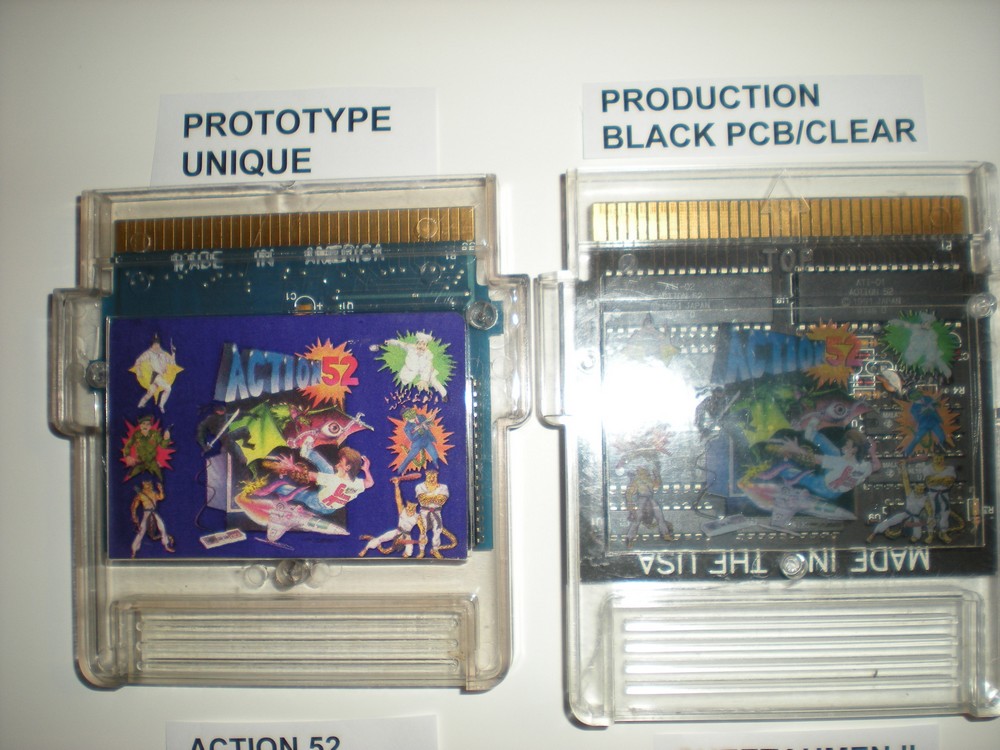
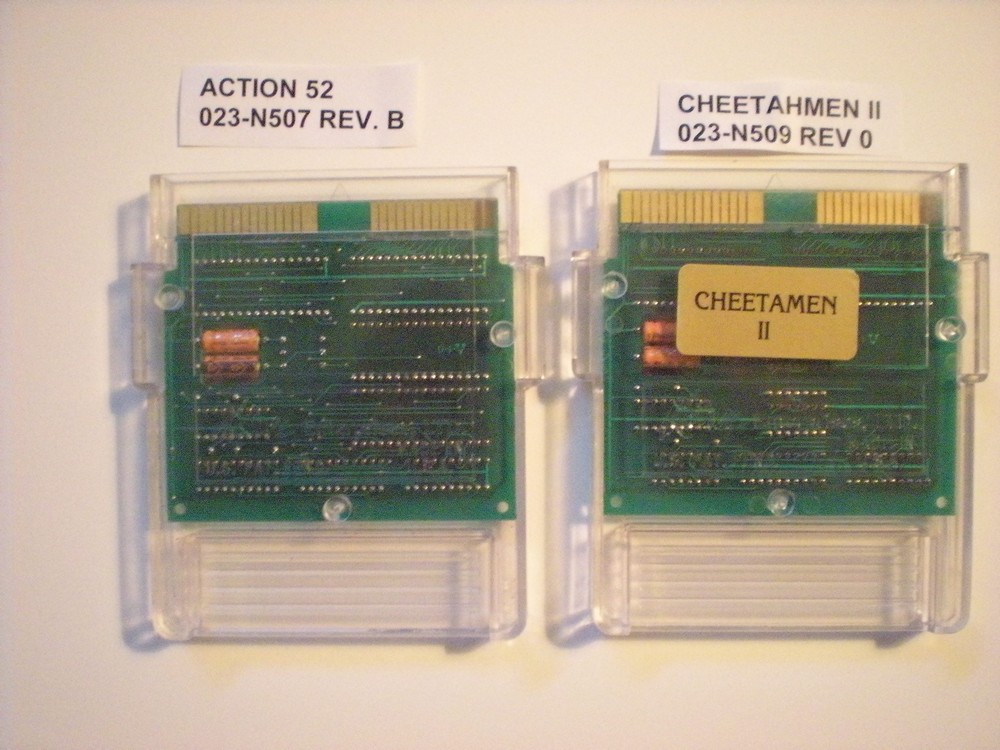
Photographed we have the following Action 52 carts:

  1. Pabich’s Blue Prototype
  2. Production w Black PCB
  3. Production 023-N507 REV. A
  4. Production 023-N507 REV. B
  5. Cheetahmen II 023-N509 REV. 0
  6. Production Sega Genesis

Take a look for yourself at the gallery of 30+ detailed and close-up photos below.? What do you think? Is Greg Pabich’s Action 52 cart a prototype or simply a rare variant?

June 25, 2010 Update: Check out my newest Action 52 article: “The Evolution of the Action 52


NES Action 52 Prototype Cart?

I was recently contacted by a gentleman named Greg wondering if I had any more information on Action 52 prototype cartridges for the original 8-bit Nintendo.? Since my knowledge is quite limited on these, I figured I’d open this one up to the gaming community to try to get him some feedback on them that way. (Post updated here)

From Greg Pabich:

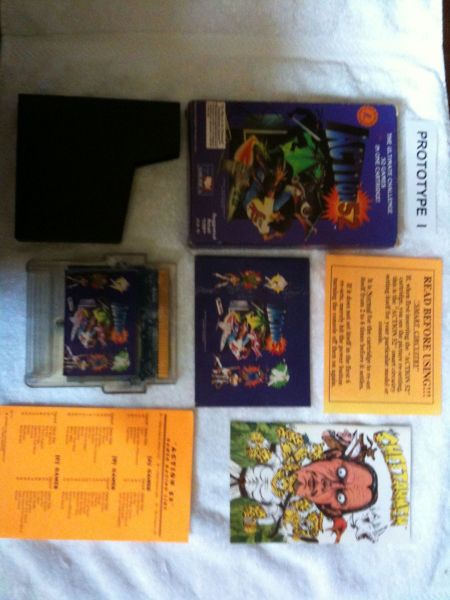
In 1990-1991 I owned a large used movie and game distributorship. I was referred to Vince Perri to see about buying a new game called ACTION 52. I went to Miami to meet him and see the game. Long story short, I did not buy the game, but I did wind up with a prototype copy. It came with the usual box, a plastic sleeve (that did not have the Active logo embossed on it) and the instructional manual, game list and Cheetahmen comicbook. This is the only one like it I have ever seen.

The differences in the production games and this one are :

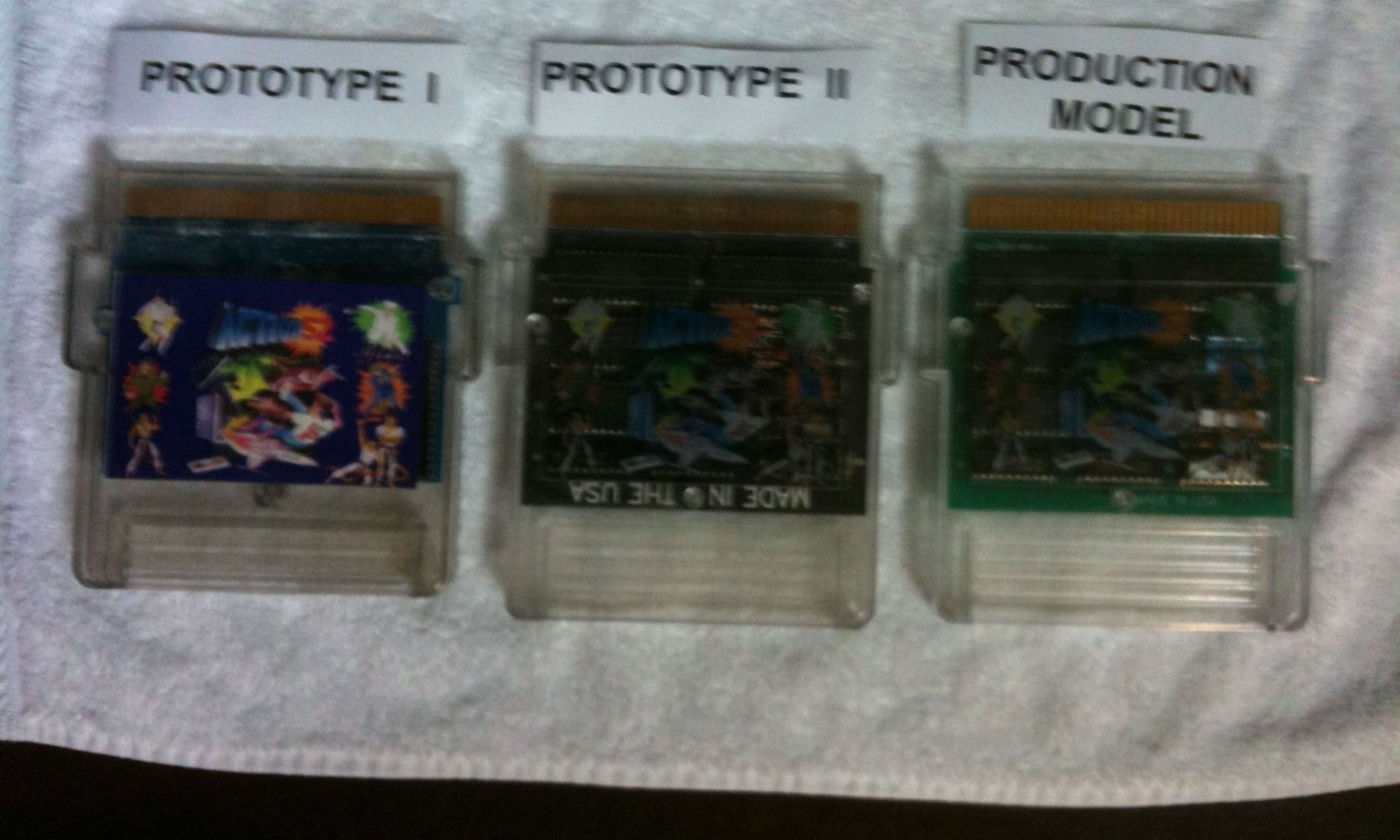
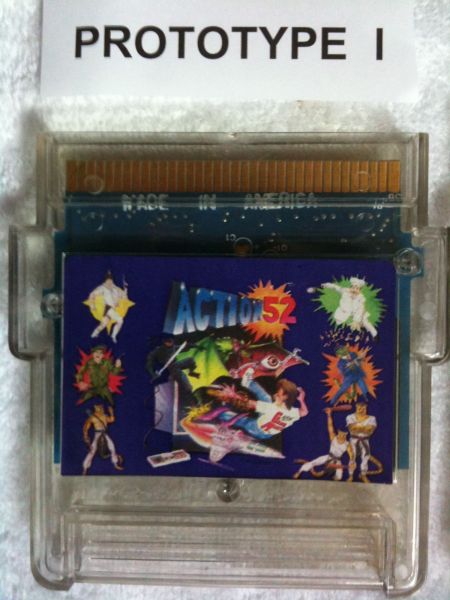
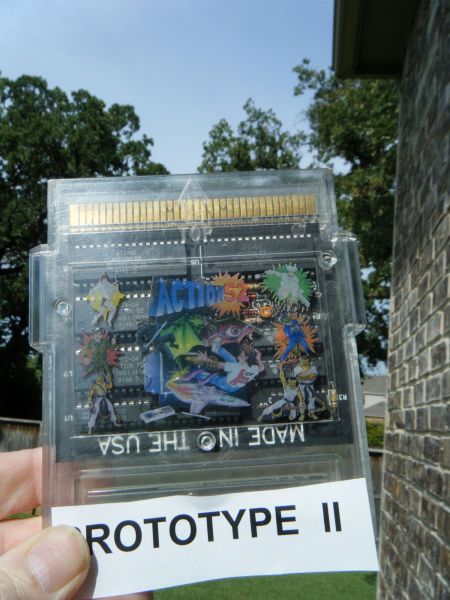
PROTOTYPE: blue motherboard, paper label (like your Variation 1) and the motherboard DOES NOT have the usual two blue capacitors? in the upper right hand corner.

My copy has a clear plastic case and has metal screws that hold the cartridge together. The plastic cartridge body is slightly different and the motherboard is entirely different in electronic configuration. It is stamped “MADE IN AMERICA” in small white letters at the top of the motherboard

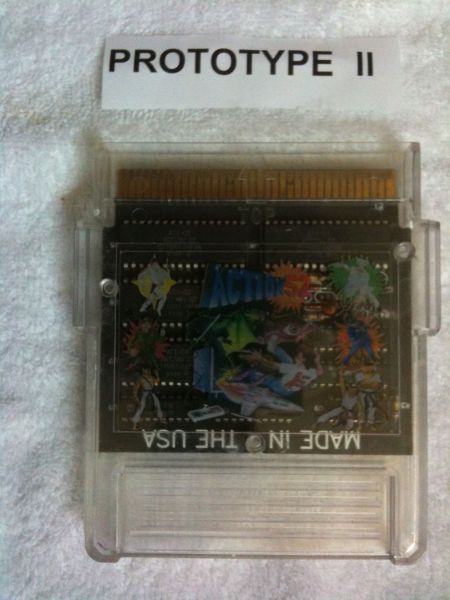
I have a second further variation. It has a clear case similar to the production style cart, black motherboard, no “capacitors” and has a painted label(decals?) like the standard production carts. I am not certain how similar this is to your Variation 1 motherboard as your noted Variation has the paper label and mine has the more “see through” decal like label. This cart is stamped “MADE IN THE USA” in large white letters that are upside down on the bottom of the motherboard

PRODUCTION: green motherboard, painted label(decals) and the motherboard has the two blue capacitors? in the upper right hand corner of the motherboard.

Has anyone else seen these two early versions or do I have something unique?

I think the prototype IS unique, but I don’t know how the second variation (black motherboard)I have fits into the timeline?

While I can’t say I know much about the differences between these models, it seems that Mike Sanders at Cheetahmen Corner has been able to shine some light on these unique cartridges in his thread.

If you have any knowledge that would be helpful for Greg regarding these games, feel free to comment below. Best of luck Greg!

UPDATE: Feel free to read my followup articles: “What’s Rarer: A Prototype Action 52 Cart or a Person Who’s Met Vince Perri?” and “The Evolution of the Action 52